


“Sunflower Biodiversity Charging Station” Conservation and Education Programme
I love doing something to help nature and society, not just for now, but also for the future.
– W.L. Hung, CEO
Integration of Glacier, Land, Ocean
Safeguard the last piece of pure land on the Earth, Let the Glacier Cool, Let the Ocean Breathe, run through the pulse to Urban Wildlife Corridor, draw a Green-blueprint – integration of glacier, land, ocean, promote green development, nurture biodiversity, promote the sustainability of humans and nature
“Sunflower Biodiversity Charging Station” Conservation and Education Programme
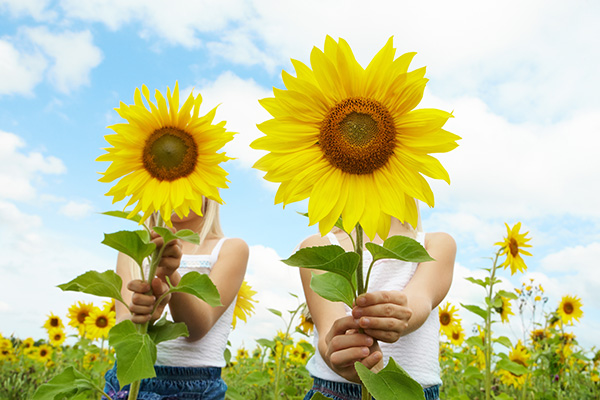
The “Sunflower Biodiversity Charging Station” Conservation and Education Programme is an important part of the “Urban Wildlife Corridor”, encouraging public to plant flowering plants, such as sunflowers, in and around cities as resting and feeding grounds for bees and pollinating insects. This will help nurture pollinating insects and protect biodiversity.
The programme encourages participating schools, businesses, and organizations to plant sunflowers through SDG-Green School Talk or Corporate ESG Goals Exchange Meeting, serving as a “nature reserve” for pollinating insects such as bees and butterflies as they move between forests and cities. Hence, it is also called the “Sunflower Biodiversity Charging Station”. Planting and protecting flowering plants are crucial for the survival of pollinating insects. They provide bees and butterflies with nectar and pollen. In turn, bees and butterflies pollinate the flowering plants, promoting forest regeneration, releasing more habitat, and fostering biodiversity.
In light of the importance of public education and awareness of biodiversity, on May 22, 2021, Will Legend established the “Sunflower Biodiversity Charging Station” Conservation and Education Programme, becoming its founding organization, CEO William Hung is the founder. May 22 is also the United Nations International Day for Biological Diversity. Will Legend deliberately chose this day as the founding date of the programme to convey a clear message to the public – biodiversity is the root of all things coexisting and sustainable development.
In December 2022, the world agreed on a global plan to change the relationship between humanity and nature. The Kunming-Montreal Global Biodiversity Framework sets 23 targets to be achieved by 2030 and 5 global targets to be achieved by 2050, aiming to curb and reverse the trend of natural ecological degradation within 25 years. Its goals include restoring 20% of degraded ecosystems and reducing the introduction or settlement of invasive alien species by 50%.
“Green-blueprint” & Sustainable Development
The “Sunflower Biodiversity Charging Station” is one of the conservation and education programmes built on the “Green-blueprint” initiative.
“Green-blueprint” – The world’s first initiative to mitigate climate change by integrating glaciers, land, and oceans, fostering three major visions—environmental protection, social philanthropy, and ethnic integration, working hand in hand with global citizens to walk the path of integration of “humans, society, economy, and nature”, practicing a peaceful, healthy, prosperous, and sustainable future.
“Environmental Protection” is the responsibility of every citizen. The “Green-blueprint” is created to integrate all the organizations/institutions and individuals who have contributed to environmental protection in the past. It aims to transform personal habits into daily measures to address climate change by combining lofty philosophies with practical solutions, working hand in hand with global citizens to walk the path of integration of “humans, society, economy, and nature”, practicing a peaceful, healthy, prosperous, and sustainable future.
Human survival is inseparable from water, food and air. Glaciers conserve clean freshwater resources, and water nourishes land with rich nutrients; Water, rich in nutrients, flows to land along “Urban Wildlife Corridor”, nurturing food and biodiversity. Water then follows rivers and merges into oceans to “Let the Ocean Breathe”. Oceans exhale oxygen, and absorb the greenhouse gas carbon dioxide to “Let the Glacier Cool”; Glaciers maintain a balance of accumulation and ablation, stabilize the planet’s temperatures, enable sustainable water resources. This recurring force of nature ultimately allows the health, peace and prosperity of humans and nature to develop sustainably.
The “Integration of Glacier, Land, Ocean”, taking an “As a whole” approach to take care of the Earth and “Let the Earth Cool”. By protecting the glaciers, we protect the land; by protecting the land, we protect the oceans; by protecting the oceans, we protect the glaciers. Nature and humans are closely linked, influencing and relying on each other.
To date, scientists have not found an effective way to address global warming. Glaciers, which regulate the Earth’s temperature and water cycle, will eventually disappear from the Earth if they melt too rapidly without replenishment. Glacier, Land, and Ocean draw the “Green-blueprint”, connecting the two places and different sectors to build an integrated relationship, also creating a platform for businesses, enterprises, organizations to give back to society and nature. This, in turn, provides resources for scientists, sponsors students, and injects economic momentum into rural and mountainous communities, practicing the “Sharing of Economic Achievements”.
Will Legend believes the best human intervention to mitigate global warming starts with simple lifestyle habits:
First, plant more flowering plants (Sunflower Biodiversity Charging Station) in outdoor locations at home and work to support pollinating insects such as bees and butterflies, thereby promoting forest regeneration and protecting biodiversity.
Second, try not to kill bees. Adopt the “Relocate & Return” approach (Home for Bees) to bring bees back into nature so that they can continue to fulfill their natural role in nature and contribute to biodiversity and human food security.
Third, businesses, organizations/institutions, schools, and homes may adopt WillNature® low-carbon and non-toxic products and Sustainable Health Service®. This not only deeply cleans and disinfects air conditioners, carpets, cars, and personal items like phones and bags, but also avoids polluting soil and flowering plants, effectively protecting bees, and pollinating insects, promoting forest regeneration, and allowing forests to absorb more greenhouse gases. Clean water sources also help protect marine ecosystems, especially marine microalgae (phytoplankton), which absorb greenhouse gases and release oxygen.
Fourth, embark on the “Willy Bee – The Journey of Glacier, Land and Ocean”. Through the 1.5°C-ClimateAction™ “Let the Glacier Cool –Glacier Journey” to connect with the “Green-blueprint” to jointly promote the integration of “Glacier, Land, Ocean and Sustainable Development”. To take care of the planet, we must act “as a whole” – healthy land and ocean are the greatest forces in mitigating global warming. They work together to address climate change, protect glaciers, polar regions, and the cryosphere, and “Let the Glacier Cool”.
Through Bridging Scientific Research, Disseminating Science Outreach, Sharing of Education, Will Legend then introduces corporate resources to jointly guide the public to refocus on the health of the planet, starting with education and glaciers. A sustainable future requires our generations to act, instilling the right values and information in the next generations, so as to truly achieve a balanced coexistence between humans, society, economy, and nature.
Biodiversity for Sustainable Development

United Nations: The Convention on Biological Diversity (CBD) is the international legal instrument for “the conservation of biological diversity, the sustainable use of its components and the fair and equitable sharing of the benefits arising out of the utilization of genetic resources” that has been ratified by 196 nations. Its overall objective is to encourage actions, which will lead to a sustainable future.
The conservation of biodiversity is a common concern of humankind. The Convention on Biological Diversity covers biodiversity at all levels: ecosystems, species and genetic resources. It also covers biotechnology, including through the Cartagena Protocol on Biosafety. In fact, it covers all possible domains that are directly or indirectly related to biodiversity and its role in development, ranging from science, politics and education to agriculture, business, culture and much more.
The CBD’s governing body is the Conference of the Parties (COP). This ultimate authority of all governments (or Parties) that have ratified the treaty meets every two years to review progress, set priorities and commit to work plans.
The Secretariat of the Convention on Biological Diversity (SCBD) is based in Montreal, Canada. Its main function is to assist governments in the implementation of the CBD and its programmes of work, to organize meetings, draft documents, and coordinate with other international organizations and collect and spread information. The Executive Secretary is the head of the Secretariat.
Without Biodiversity, Humans Are Difficult to Survive
The United Nations pointed out as the global community is called to re-examine our relationship to the natural world, one thing is certain: despite all our technological advances we are completely dependent on healthy and vibrant ecosystems for our water, food, air, medicines, clothes, fuel, shelter and energy, just to name a few. Biological diversity is often understood in terms of the wide variety of plants, animals and microorganisms, but it also includes genetic differences within each species — for example, between varieties of crops and breeds of livestock — and the variety of ecosystems (lakes, forest, deserts, agricultural landscapes) that host multiple kind of interactions among their members (humans, plants, animals).
Biodiversity resources are the foundation of human civilization . Fish provide 20% of the animal protein for nearly 3 billion people. More than 80% of the human diet comes from plants. In rural areas of developing countries, up to 80% of the population relies on traditional herbal remedies made from plants for basic medical care.
The loss of biodiversity threatens the health of all living things, including humans. It has been shown that biodiversity loss can contribute to zoonotic diseases —diseases that spread from animals to humans. However, if we can protect it, biodiversity can be an excellent tool in combating pandemics caused by coronaviruses.
Planting Flowers as Daily Practice That Supports Biodiversity
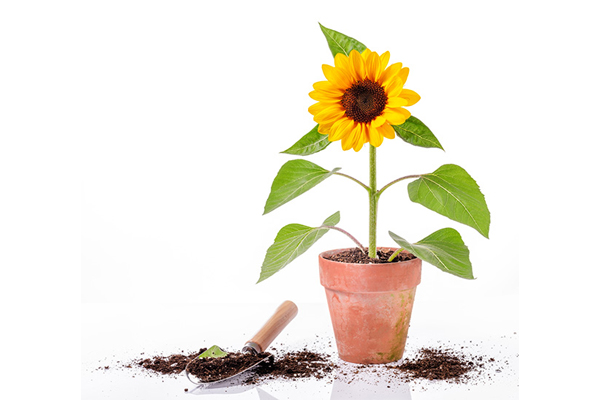
Nearly 31% of land is forest, home to over 80% of terrestrial animal, plant, and insect species. Given the vastness of land, past conservation efforts have been either broadly framed as “protecting the environment” or focused on protecting individual land species. However, implementation has proven elusive. While raising public awareness is crucial, it is often difficult to get people up close, to see, and touch. In light of this, the “Sunflower Biodiversity Charging Station” advocates planting flowering plants—sunflowers—and having bees protect forests, ecosystems, and biodiversity. Furthermore, Will Legend presents these stories to the public in an easy-to-understand way through the “Willy Bee-The Journey of Glacier, Land and Ocean” storybook.
SDG Green School Talk – Experiential Learning (Interactive Learning)
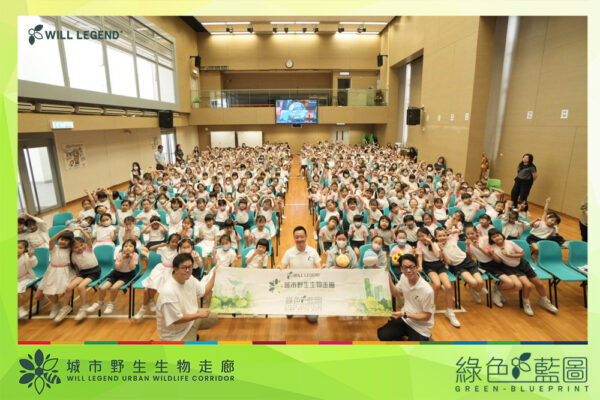
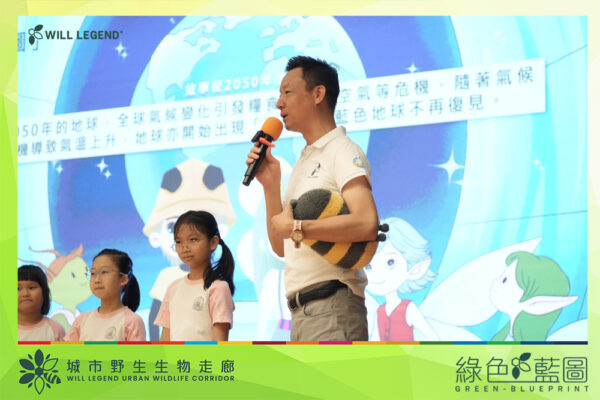
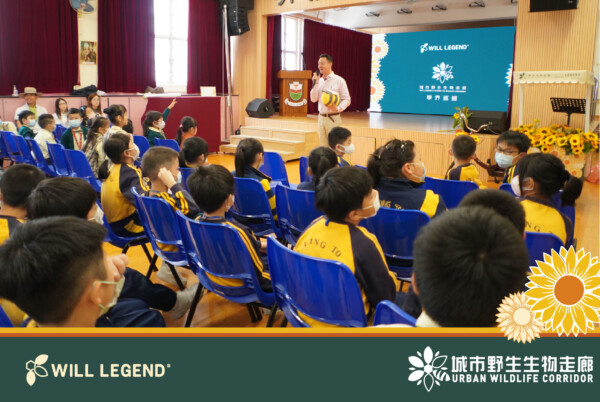


Starting with a sunflower seed, the embryo first grows from the seed, then the roots extend downwards into the soil. Next, a small sprout grows upwards from the soil, becoming a sunflower and transforming into a “Sunflower Biodiversity Charging Station”. We encourage the public and children to plant their own unique “urban wildlife corridor”. They can observe plants, bees, and butterflies up close. This activity also allows everyone to temporarily escape from screens and phones.
Since 2022, Will Legend has been promoting the use of flowering plants to nurture bees and protect the land through the “Urban Wildlife Corridor”, reaching out to secondary, primary schools and kindergartens. Ultimately, the goal is to simultaneously implement this philosophia and practice, working with scientists, businesses, institutions, teachers, students, and the public to drive humanity towards a sustainable future. The “Urban Wildlife Corridor” also includes several initiatives such as “Sunflower Biodiversity Charging Station, Sustainable Health Service, and Home for Bees”—advocating for planting flowering plants in and around cities, reducing or discontinuing the use of toxic pesticides and cleaning agents, and adopting “Relocate & Return” methods to protect bees rather than killing them with pesticides. The aim is to inspire the public to protect bees, allowing them to move freely between forests and urban wildlife corridors. This will increase the quantity and quality of agricultural production, promote forest regeneration, restore land, improve drought resistance, achieve livable climate and biodiversity goals, reduce food shortages, and promote human health and well-being.
Aligning ESG Goals with the United Nations Sustainable Development Goals (SDGs)
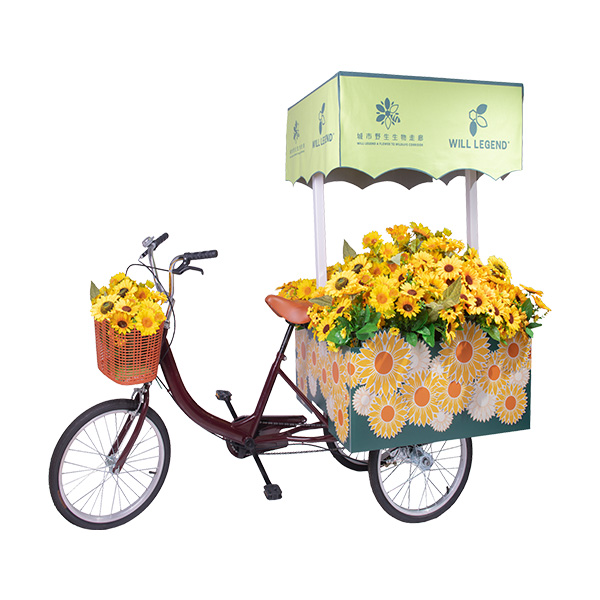
The “Sunflower Tricycle” symbolizes creating an urban wildlife corridor (green corridor), providing a safe passage for pollinators, rebuilding our ecosystem to increase biodiversity, and conveying the message of protecting nature. We hope to gain the support and participation of businesses, governments and service organizations so that we can bring more activities to schools, social welfare institutions and communities.
By supporting “Sunflower Biodiversity Charging Station” Conservation & Education Programme, businesses and service organizations can not only enhance their corporate social responsibility (CSR) image, but also align ESG goals with the United Nations Sustainable Development Goals (SDGs). Will Legend also hopes that the programme will promote care and kindness, achieve a balanced coexistence between humanity and nature, and create a more beautiful planet for our next generation.