


“Let the Glacier Cool” Conservation & Education Programme
Safeguarding Glaciers and Water
Initiative: Green development (green energy and green economy) and low-carbon, non-toxic lifestyles to mitigate rapid glacier melt and conserve freshwater resources — the source of life
SDG: “Let the Glacier Cool” Climate Action protects glaciers, the cryosphere, and water in Antarctica, the Arctic, and the Third Pole; Visiting schools in Xinjiang to provide more learning opportunities for children in both places; Promoting IP collaboration between Hong Kong and the Mainland in the ice-and-snow economy, injecting new vitality into the local economy (SDG4, SDG6, SDG8, SDG13)
Practice: Founded “Let the Glacier Cool – Glacier Journey” and “Let the Glacier Cool – Ice Core Journey”, embarking on glaciers, understanding glaciers, and protecting glaciers, tracing the origins of water and Chinese culture – “When drinking water, remember its source. Same roots, same heart” ; Hong Kong–Xinjiang Children’s Touring Painting Exhibition practicing Education as Starting Point, Art as Medium, Addressing Climate Change as Goal
I love doing something to help nature and society, not just for now, but also for the future.
– W.L. Hung, CEO
Integration of Glacier, Land, Ocean
Safeguard the last piece of pure land on Earth; Let the Glacier Cool; Let the Ocean Breathe; connect with the pulse of the Urban Wildlife Corridor; and draw a Green-blueprint — Integration of Glacier, Land, Ocean — to promote green development, nurture biodiversity, and advance the sustainable development of humans and nature.
“Let the Glacier Cool” advocates:
- “When Drinking Water, Remember Its Source” Taking Climate Action SDG13 to Safeguard Glacier and Water
- Glaciers Play a Vital Role in Nurturing Freshwater (Drinking Water) and Biodiversity
- “Green-blueprint: Integration of Glacier, Land, Ocean” Addressing the Climate Crisis and Poverty
- “Integration of Humans, Society, Economy and Nature” Moving Humanity Towards a Bright Future of Sustainable Development
- “Two-Places Integration” Activity Promoting Conservation, Education, Science Outreach, and Cultural Exchange
- Green Economy, Green Financing (Climate Finance), Green Transition, and Clean Energy Reduce Carbon Emissions and Mitigate Global Warming
- Promoting Green Development in an Orderly Manner to Build a Liveable Planet, Implement the Sustainable Development Goals (SDGs), and Meet the 1.5°C Climate Goal
- The Belt and Road Initiative Promotes Cooperation, Especially with Developing Countries, in the Green Energy Industry, Agricultural Production Capacity, and Ecological Construction
- The United Nations (UN) Paris Agreement, Convention on Biological Diversity, Convention to Combat Desertification, Framework Convention on Climate Change, Water Action Agenda, Decade of Action for Cryospheric Sciences, Kunming-Montreal Global Biodiversity Framework
- The United Nations (UN) 2025 International Year of Glaciers’ Preservation, World Day for Glaciers 21 March, World Water Day 22 March, World Bee Day 20 May, World Oceans Day 8 June
“Let the Glacier Cool” Safeguards Glaciers and Water

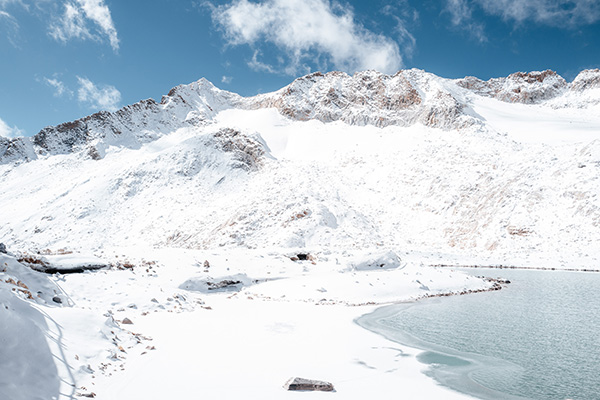
For some people living in cities, it is hard to understand the value of nature, such as glaciers, land, oceans, wildlife, insects, plants, rivers, forests, and beautiful natural landscapes. The fact is that nature supports our society, economy, life and future, including providing humans with the most important elements of life—water, food and air. We should not consider nature’s resources inexhaustible and overexploit them.
Human survival is inseparable from water, food and air. Glaciers conserve clean freshwater resources; nutrient-rich water flows to the land through the “Urban Wildlife Corridor”, supporting food production and biodiversity; water then flows along rivers and into the oceans, helping to “Let the Ocean Breathe”.
The oceans exhale oxygen and absorb the greenhouse gas carbon dioxide, helping to “Let the Glacier Cool”; glaciers maintain a balance between accumulation and ablation, stabilize the Earth’s temperature, and maintain sustainable water resources. This recurring force of nature ultimately promotes the health, peace, prosperity and sustainable development of humans and nature.
The “Integration of Glacier, Land, Ocean” takes a holistic approach to caring for the Earth and “Letting the Earth Cool”. By protecting the glaciers, we protect the land; by protecting the land, we protect the oceans; by protecting the oceans, we protect the glaciers. Nature and humans are closely linked, influencing and relying on each other.
Glaciers cover about 11% of the Earth’s land area and contain about 70% of the world’s freshwater resources. They play an important role in regulating the Earth’s temperature, global thermal balance and water balance. Message from Ms Audrey Azoulay, Director-General of UNESCO, on the occasion of World Day for Glaciers and World Water Day: “The Andes Mountains, which supply half of the water flowing into the Amazon River, have lost between 30 and 50% of their glaciers since the 1980s and could lose 97% of their icecaps by the end of the century. The glaciers of Mount Kenya, Rwenzori and Kilimanjaro will disappear entirely by 2040 if no action is taken, while the Hindu Kush-Karakoram-Himalayan system, commonly referred to as the ‘Third Pole’, is projected to lose half of its glacier volume by the year 2100.”
2025 International Year of Glaciers’ Preservation
The Importance of Glaciers: Glacier mass balance is an important indicator of climate change, and glacier melt also contributes to sea-level rise. Furthermore, glaciers are a vital source of freshwater for humans and other organisms.
WMO’s “State of Global Water Resources 2023” and “State of the Climate 2024 Update” reports show that, collectively, the world’s glaciers lost over 600 gigatons of water in 2023. This amount is about 13% of the world’s annual water consumption and represents the largest mass loss in almost 50 years of measurements. Following 2022, 2023 marked the second consecutive year in which all glaciated regions in the world reported net ice loss.
This underscores a pressing challenge: the long-term reduction in water stored as ice will critically affect future water resources for people and ecosystems. To emphasize the importance of glaciers, the World Meteorological Organization and UNESCO have long advocated for the protection of glaciers and ice sheets and jointly led the International Year of Glaciers’ Preservation in 2025.
The Best Human Intervention Measure to Combat Climate Change – Education (Science Outreach).
“Let the Glacier Cool” is a cross-border initiative promoting sustainable development for both humans and nature. It was jointly launched by Will Legend and the Northwest Institute of Eco-Environment and Resources, Chinese Academy of Sciences. The programme begins with glacier preservation, inspiring the public to adopt a holistic approach to protecting glaciers, land, and oceans to cool the Earth and safeguard its “health.” This also protects vital elements for human life—water, food, and air. Will Legend is delighted to demonstrate to everyone how the “Let the Glacier Cool” platform serves as a bridge between scientific research and the public, transforming research into science outreach and educational activities and translating research findings and perspectives into everyday measures that the public can take to combat climate change. Ultimately, it aims to bridge the gap between scientists, businesses, organizations, and the public, addressing the climate crisis in a shared language.
The “Let the Glacier Cool” platform, once its gears are set in motion, will enable enterprises/organizations to share their economic achievements in exchange for corporate social responsibility and ESG performance; scientists to share their research results and theories on the platform in exchange for resources to continue their research and to gain greater public acceptance of their ideas; and teachers and students to actively support the platform’s activities in exchange for opportunities to accumulate knowledge and help the next generation plan their own “Green-blueprint” for the future. Through the interaction and contributions of these three main groups, the public will be able to more easily grasp how to make changes in their daily lives as practical measures to combat climate change, better protect glaciers, land, and oceans, and promote sustainable development for both humans and nature.
Without the unwavering dedication and selfless contributions of scientists, how could ordinary citizens like us know that the Earth “is running a fever” in the face of global challenges such as climate change and the climate crisis? The engine of the “Let the Glacier Cool” platform has been successfully started. Here, we would like to express our special thanks to Researcher Li Zhongqin, Academic Director of the Tianshan Glacier Station, Northwest Institute of Eco-Environment and Resources, Chinese Academy of Sciences, and Researcher Wang Feiteng, Director of the Tianshan Glacier Station, for acting as a bridge between “scientific research and science outreach”. In the future, Will Legend also looks forward to climate experts and scientists from around the world joining the “Let the Glacier Cool – Hong Kong Glacier Station” and jointly contributing to the protection of our blue planet.
“Let the Glacier Cool” Social Platform for Scientists. There is no shortage of environmental scientists in society, including those working in the fields of glaciers (polar regions), land, oceans, and climate. They are all guardians of nature. Not only have they made extraordinary academic achievements, but they have also provided many “prescriptions” for the health of the Earth through the data and results obtained from their various experiments, observations, and research. But the reality is that many of the “prescriptions” are only circulated within their fields or in academic forums. The reason is that these “prescriptions” often cannot be “decoded” or transmitted to society and the public in a down-to-earth way. Similarly, some companies and organizations with social responsibilities are also very willing to contribute to SDG and ESG projects. But they also face the same problem, which is how to provide resources for scientists through “message decoding”, sponsor students, bring economic momentum to people in rural and mountainous areas, put the sharing of economic achievements into practice and promote sustainable development of society and nature.
At present, in the context of global warming, responding to climate change and mitigating the climate crisis have become major global challenges. Whether from the business, scientific, non-governmental, or education sectors, we all hope to make contributions and promote climate action. Therefore, Will Legend promotes the “Green-blueprint” – The Integration of Glacier, Land, Ocean. Starting with “Let the Glacier Cool”, we will then promote “Urban Wildlife Corridor” and “Let the Ocean Breathe” simultaneously, protecting both land and oceans. We hope to implement this philosophy and these practices, and work together with scientists, business and organizational representatives, teachers, students and the public to promote a bright future of sustainable development for humans and nature.
Glaciers, land, and oceans draw the “Green-blueprint”. Then, the “Green-blueprint” educates the public and raises their awareness of the need to protect the Earth. Through initiatives such as the “Willy Bee – The Journey of Glacier, Land and Ocean” storybook, SDG-Green School Talk, Sustainable Health Service, Third Pole Hong Kong Glacier Museum, Climate Change Museum, and the “Green-blueprint – Glacier, Land and Ocean Journey”, we aim to bring the public closer to nature and build comprehensive science outreach and educational activities that translate into everyday measures to address climate change. These initiatives seek to reduce emissions and lower temperatures at their source, thereby mitigating the climate crisis caused by global warming.
The “Green-blueprint” aims to achieve conservation and education goals through education and science outreach activities. It is a geoengineering initiative in which every member of society can participate, and it will also be the best human intervention measure to address climate change. In the future, Will Legend hopes to connect with the World Glacier Monitoring Service (WGMS), the World Meteorological Organization (WMO), etc., to become close partners, and jointly promote the protection of the cryosphere and the health of the planet as a whole.
“Let the Glacier Cool” is a Cross-regional Initiative to Protect Glaciers and Write Hong Kong’s Glacier Story
Does the fact that we do not see glaciers rapidly retreating due to global warming in Hong Kong mean that issues such as water security, flooding, and sea-level rise will not affect us?
More than 275,000 glaciers worldwide cover approximately 700,000 km². Glaciers and ice sheets store about 70% of the world’s freshwater. However, these ice formations are rapidly retreating due to climate change. Preserving these crucial resources is essential not only for environmental sustainability, but also for economic stability and the protection of cultural services and livelihoods.
WMO Secretary-General Celeste Saulo said: “WMO recently confirmed that 2024 was the warmest year on record and has sounded repeated Red Alerts about the state of our climate, including the retreat of glaciers. In 2023, glaciers suffered the largest mass loss in the five decades of record-keeping. It was the second consecutive year in which all regions of the world with glaciers reported ice loss. Melting ice and glaciers threaten the long-term water security of many millions of people. This international year must be a wake-up call to the world.”
Perhaps we have not yet felt the immediate threat. But imagine if all the mountain glaciers—the “World’s Water Towers”—disappeared, and the ice sheets in Antarctica and the Arctic melted completely. As a coastal city, could Hong Kong and other low-lying regions around the world escape the threats of rising sea levels and flooding? Therefore, protecting the glaciers of Antarctica, the Arctic, the Third Pole, and mountainous regions is one of humanity’s most pressing challenges.
This is the creative background for “Willy Bee – The Journey of Glacier, Land and Ocean”, a journey across the Qinghai-Tibet Plateau, starting with Tianshan Glacier No. 1 in Xinjiang and Dagu Glacier in Sichuan, to tell the Glacier Story of Hong Kong and save the Earth’s vital glaciers. In this way, we can also protect the essential elements of human life—water, food, and air.
Glaciers are the Source of Life
Glaciers are the source of life, providing precious freshwater resources for humans, animals, and plants. Glaciers are crucial for regulating the global climate and providing freshwater for billions of people. However, due to climate change caused by human activities since the 19th century, glaciers are melting at an unprecedented rate. Against this background, Will Legend founded the “Let the Glacier Cool” Conservation & Education Programme—the Nation’s First Hong Kong-Mainland of China Glacier Preservation Joint Action. It aims to inspire people around the world to embark on a glacier journey, learn about glaciers, and protect them.
Water is the source of all things. Through changes in its gaseous, liquid, and solid states, it drives the Earth’s climate and ecological cycles. Therefore, Will Legend and the Northwest Institute of Eco-Environment and Resources, Chinese Academy of Sciences have joined hands to promote environmental protection through “Let the Glacier Cool” by protecting glaciers and water sources; social philanthropy through the “Let the Glacier Cool – Glacier Journey” and the “Let the Glacier Cool – Ice Core Journey”; and ethnic integration through activities that promote the integration of the two places. “Let the Glacier Cool” is an education-based initiative that uses conservation as a medium, with the goal of addressing climate change. It brings together people from both places to advocate “Environmental Protection, Social Philanthropy, Ethnic Integration”, embark on a path that integrates “Humans, Society, Economy and Nature”, and foster a peaceful, healthy, and prosperous society.
The “Let the Glacier Cool” initiative simultaneously implements the philosophy and practices of glacier preservation. The Northwest Institute of Eco-Environment and Resources, Chinese Academy of Sciences; the Tianshan Glaciological Station, Chinese Academy of Sciences; and Will Legend have transformed “Let the Glacier Cool” into a new-era connecting platform that integrates resources from different regions and sectors of society. By “bridging scientific research, disseminating science outreach, and sharing education”, the platform attracts more scientists to participate in science outreach, inspires the public to pay attention to and protect glaciers, provides more opportunities for enterprises to give back and offer sponsorship, and encourages more talented individuals, researchers, and policymakers to devote themselves to the important work of glacier research and protection. Let us work together to protect precious and fragile glaciers, glacial water resources, snow lines, and the cryosphere, leaving a more liveable Earth for future generations.
While protecting glaciers, we also need to protect the land and oceans, safeguarding the Earth’s health in a holistic way. As glaciers, land, and oceans have long remained relatively unfamiliar to the public, they are often regarded merely as geographical regions, divisions, or names. As a result, their absolute importance to the survival of humans and other living organisms is often overlooked. The “Green-blueprint – Glacier and Water, Land and Food, Ocean and Air” represents the conservation and education programmes of “Let the Glacier Cool, Urban Wildlife Corridor, and Let the Ocean Breathe”, respectively. These programmes are closely linked to the United Nations Sustainable Development Goals (SDGs) and Climate Goals. Their purpose is to inspire people to live in balance with nature and fundamentally protect the most important elements of human life—water, food, and air.
“Willy Bee – The Journey of Glacier, Land and Ocean” Chapter 3: Willy Bee and Flowery Arrive at the Asian Water Tower and Mother Rivers (Glacier and Water)
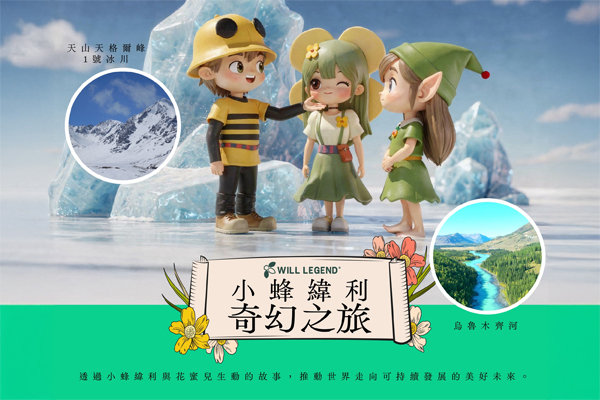
“Nature and humans are closely linked, influencing and relying on each other.” Wind carries the message of nature
The world in 2050 is so polluted that plants, animals and insects are almost extinct. Humans have changed from groups to cold individuals, no longer valuing the people around them, their families and their communities.
“War and pollution have made the Blue Planet no longer be seen. No one knows what nature is. Even the elements of human life, such as water, food and air, are artificially produced. Biodiversity has been lost and the ecosystem has been destroyed. There are no rivers, lakes, wetlands or forests on the Earth anymore. There are no healthy glaciers, land and oceans.” Wind said
“Safeguard the last piece of pure land on the Earth, Let the Glacier Cool, Let the Ocean Breathe, run through the pulse to Urban Wildlife Corridor, draw a Green-blueprint – integration of glacier, land, ocean, promote green development, nurture biodiversity, promote the sustainability of humans and nature.” Willy Bee said
“As long as you stick to your original aspirations and protect the Rio Conventions on Sustainable Development, the covenant between mankind and God, God will guide you, and the Legend of Will (Will Legend) is still going to be told!” Flowery Delek said
“Pray in the wind, unity of heaven and humanity. You need to collect polar gems such as ice, snow, and permafrost, and then form a magic cryosphere to awaken the White Giant.” Flowery Delek said
“Protect the last piece of pure land on Earth! The white giant is the guardian of the world’s water tower, protecting the fresh water resources of billions of people.” Willy Bee keeps thinking about the hint from nature in his heart
Therefore, Willy Bee spread his wings and set off with the wind, carrying Flowery. Facing with an unpredictable and uncontrollable future, Willy Bee and Flowery are trembling with fear, searching step by step for the source of water power. Suddenly, the time tunnel opens again.
“Please believe that everything is the best arrangement. As long as we keep our faith and confidence and persevere to the end, we will be able to release the 3060 dual carbon power of the ‘Green-blueprint’, neutralize greenhouse gases, and promote the sustainable development of humans and nature.” Captain Mat of the Barefoot Elf said
“You have to cross the Tianshan Tianger Peak Glacier No. 1, which is full of water power, and search for the ‘Young Guardians of Glacier’ along the Urumqi River to obtain the power number 322 and the key to open the world’s water tower, and decode the ‘water’ seed of life; you also have to fly over the ‘Glacier in the Deep Ravine’ that will disappear in 2030, and use the power number 321 to establish the legendary ‘Third Pole Hong Kong Glacier Landmark’ with super new energy power to Let the Glacier Cool.” Captain Mat said
From that moment on, Willy Bee and Flowery receive full support from Captain Mat and the other three barefoot elves. They learn the spirit of the Sustainable Development Agenda, work together to awaken humanity’s attention to the health of the Earth from “Xi”, unite all sectors, promote shared economic achievements, inclusive society, and harmonious coexistence between humans and nature through the activities of conservation, education and social-philanthropy, and implement the Sustainable Development Goals (SDGs) and Climate Goal initiatives.
“Let the Glacier Cool” Experiential Learning:
- Glaciers: Glaciers cover about 11% of the Earth’s land area and contain about 70% of the world’s fresh water resources. They play an important role in regulating the Earth’s temperature, global thermal balance and water balance
- Power Number 321: The United Nations designated March 21 as World Glacier Day, calling on the world to take action to protect glaciers. More than 2 billion people worldwide rely on glaciers and snowmelt for water
- Power Number 322: The United Nations designated March 22 as World Water Day to draw the world’s attention to the importance of fresh water and promote the sustainable management of fresh water resources to solve the global water crisis
- “Water” Seed of Life: Glaciers store nearly two-thirds of the Earth’s fresh water, making them the world’s water towers. Ensuring fresh water supply for billions of people around the world is vital
- Rio Conventions: The United Nations Convention to Combat Desertification, the United Nations Framework Convention on Climate Change and the Convention on Biological Diversity are collectively known as the three major Rio Conventions
- Cryosphere: The cryosphere, composed of glaciers, snow, ice and permafrost, it plays an important role in regulating the Earth’s climate and ecosystem stability
- Urumqi River: The Urumqi River originates from Glacier No. 1 near Tianger II Peak in the Central Tianshan Mountains in Xinjiang – Tianshan Glacier No. 1
- “Young Guardians of Glacier”: Chinese glaciologists, meteorologists and experts
- World Water Towers: Glaciers are natural freshwater reservoirs whose meltwater supports drinking water supplies, agriculture, industry and ecosystems
- The Disappearing “Glaciers in the Deep Ravine”: In 2024, the Global Glacier Disappearance List (GGCL) project selected glaciers that are about to melt away and have scientific research and socio-economic value as representatives from around the world to show the world the dramatic changes in glaciers and the urgency of protecting them. Dagu Glacier is included as the only glacier in China that is expected to disappear by 2030
- “Third Pole Hong Kong Glacier Landmark”: On December 28, 2023, Mr. William Hung, CEO of Will Legend presented the “Third Pole Hong Kong Glacier Landmark” to the Dagu Glacier Management Bureau as a symbol of promoting cultural exchanges and ethnic integration between the Mainland of China and Hong Kong, and opening a new chapter of friendship between the people of the two places
- 3060 Dual Carbon Power: Carbon Peak in 2030 and Carbon Neutrality in 2060
- Let the Glacier Cool: Will Legend is the initiator of the “Let the Glacier Cool” Conservation and Education programme. The programme takes Xinjiang Tianshan Glacier No. 1 and Sichuan Dagu Glacier as starting points to promote the sustainable development of glaciers, glacial water resources and cryosphere, and contribute to the United Nations Sustainable Development Goals (SDGs) and climate goals
- “Xi”: On June 12, 2024, President Xi Jinping delivered a video speech to the opening ceremony of the celebration of the 60th anniversary of the founding of the United Nations Conference on Trade and Development. President Xi pointed out that China will help implement the UN 2030 Agenda for Sustainable Development
“Let the Glacier Cool” Conservation & Education Programme


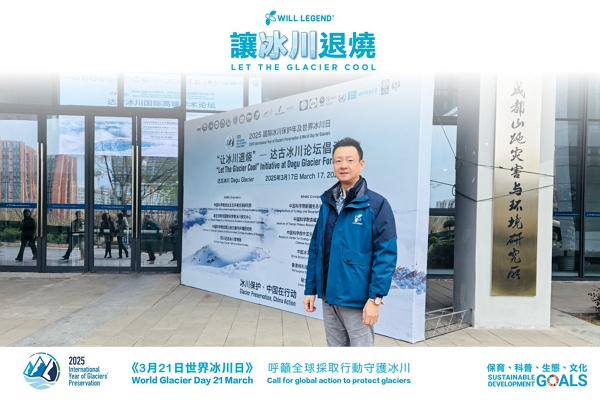
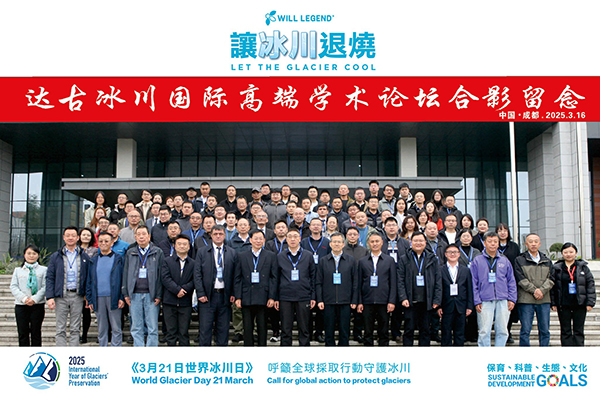
On 21 March 2023, Will Legend founded the “Let the Glacier Cool” Conservation and Education Programme, becoming the programme’s founding organisation, with CEO William Hung as its founder. In the same year, Will Legend received a response from Researcher Wang Feiteng of the Northwest Institute of Eco-Environment and Resources, Chinese Academy of Sciences, expressing his full support for the development of the “Let the Glacier Cool” Programme.
On 28 December 2023, Will Legend presented the “Third Pole Hong Kong Glacier Landmark”—a bridge of friendship between Hong Kong and the Mainland—to the Dagu Glacier Administration Bureau. From that moment onwards, Will Legend, the Northwest Institute of Eco-Environment and Resources, Chinese Academy of Sciences, and the Dagu Glacier Administration Bureau jointly launched the country’s first glacier protection joint action.
In April 2024, the first Third Pole Glacier Journey welcomed 128 teachers and students into the embrace of the “White Giants”. In November of the same year, under the “Let the Glacier Cool” Programme, the first-ever sister-school partnership between two schools in Hong Kong and Sichuan was established. It provided Hong Kong students with richer learning experiences, deepened their understanding of the motherland and promoted the shared development of education in the two places. Throughout 2024, a total of four schools embarked on the Third Pole Glacier Journey, entered the cryosphere and witnessed first-hand the rapid glacial retreat caused by climate warming. Through the academic study and scientific experiments specially designed for Will Legend by Researcher Wang Feiteng, Director of the Tianshan Glaciological Station of the Chinese Academy of Sciences, participants put the protection of glaciers and the cryosphere into practice.
On 16 March 2025, the “2025 International Year of Glaciers’ Preservation” Dagu Glacier International Academic Summit Forum was held. Speakers included Professor Liss Marie Andreassen, President of the International Association of Cryospheric Sciences; Qin Dahe, Academician of the Chinese Academy of Sciences and President of the Chinese Society of Cryosphere Sciences; Yao Tandong, Academician of the Chinese Academy of Sciences, leader of the Second Tibetan Plateau Scientific Expedition and Research, and President of the China Society on Tibetan Plateau; and Feng Qi, Academician of the Chinese Academy of Engineering and Director General of the Northwest Institute of Eco-Environment and Resources. The forum featured keynote and invited presentations promoting the “Let the Glacier Cool” Initiative and the protection of glaciers, glacial water resources and the cryosphere. William Hung, CEO of Will Legend, represented Hong Kong and also served as a representative of a co-organising institution and a member of the Scientific Committee. During the keynote presentations, Will Legend offered a perspective beyond that of scientists, proposing the use of “Let the Glacier Cool” school talks and academic study tours, corporate research trips and exchange meetings to raise public awareness of glacier protection. These activities would provide greater exposure for scientists’ work, attract more public attention and encourage businesses to provide resources and support.
On 17 March 2025, a meaningful cryosphere-themed event was held, marking an important milestone in bringing the “Let the Glacier Cool” Conservation and Education Programme to the motherland and onto the international stage. Will Legend connected representatives from the Northwest Institute of Eco-Environment and Resources, Chinese Academy of Sciences; Tianshan Glaciological Station, Chinese Academy of Sciences; Xinjiang Tianshan Glacier National Field Scientific Observation and Research Station; Polar Research Institute of China; Ministry of Natural Resources; Dagu Glacier Administration Bureau; and the Center for Glacier Research of the National Academy of Sciences of Tajikistan to jointly advance the “Let the Glacier Cool” Initiative at Dagu Glacier. Through public participation, scientists took action to call on more people to pay attention to global climate change. Glacial retreat not only affects the ecological balance but is also closely linked to global water security and climate change.
In April 2025, the inaugural SDG-in-China™ Research Trip for the “Let the Glacier Cool – Xinjiang Tianshan Glacier No. 1 Journey™” was successfully held, fostering mutual understanding and integration between the people of the two places while promoting the United Nations Sustainable Development Goals (SDGs) and environmental protection. Will Legend joined representatives from the Tianshan Glaciological Station, Chinese Academy of Sciences; Xinjiang Meteorological Integrated Media Science Outreach Centre; Hong Kong Shun Tak Fraternal Association Lee Kam Primary School; Rotary International District 3450; and the Rotary Club of Shatin to launch the “Green-blueprint – Let the Glacier Cool”. Through the Glacier Journey, the initiative promotes both glacier protection and local economic growth.
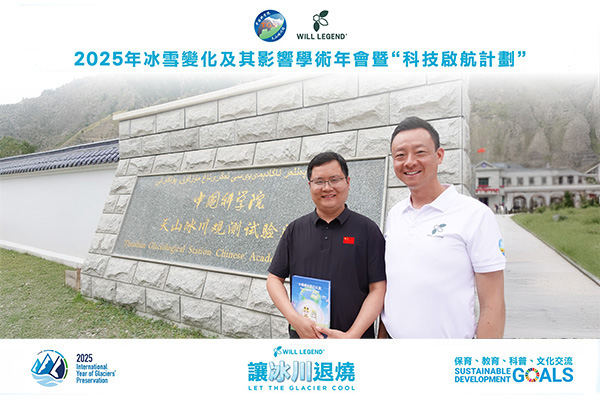
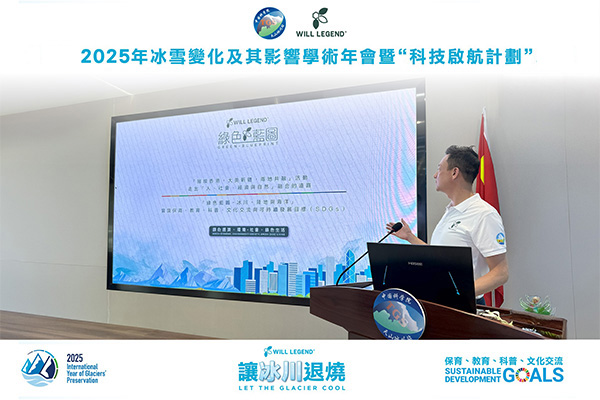
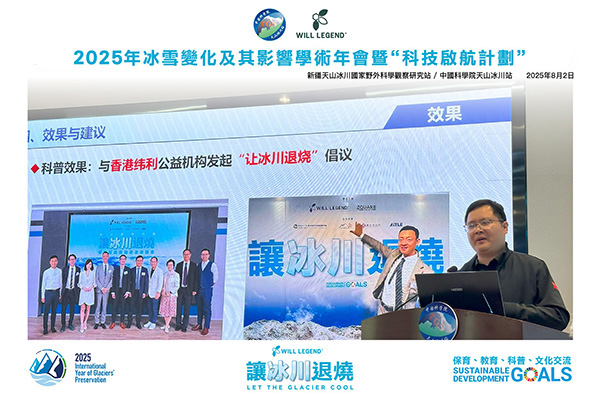
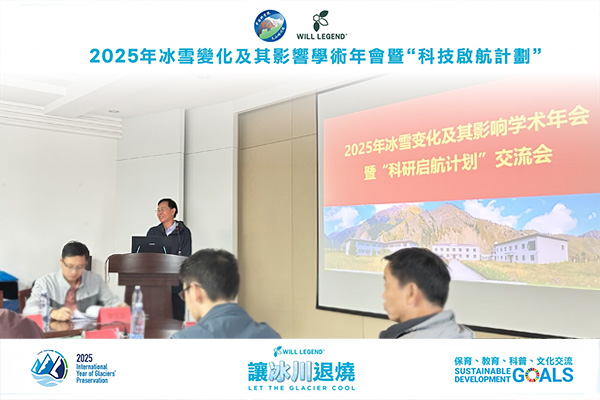
On 2 August 2025, William Hung, Hong Kong representative and participating expert, attended the 2025 “Changes of Alpine Snow and Ice and Their Impacts” Annual Academic Conference. Topics included activities for the 2025 International Year of Glaciers’ Preservation, snow and ice observation and research, scientific research methods and talent development, with experts in related fields invited to deliver presentations. Researcher Li Zhongqin, Academic Director, presented the “Progress Report on Glacier Research at Tianshan Glacier Station”, leading snow, ice and hydrology experts in a joint discussion on protecting glaciers and glacial water resources. Researcher Wang Feiteng presented the “Research and Application of Glacier Protection Measures” report, which highlighted the significant achievements of the “Let the Glacier Cool” science outreach work jointly promoted by Will Legend and the Northwest Institute of Eco-Environment and Resources, Chinese Academy of Sciences. As a national science education base, the Tianshan Glaciological Station of the Chinese Academy of Sciences provides field internship support for disciplines including physical geography, geographical information systems, hydrology and water resources, resources and the environment, and human geography. Since the “Scientific Research Start-up Programme”, its joint summer internship programme for university students, was established in 2013, the station has signed cooperation agreements with relevant faculties at eight universities, providing undergraduate students with a research internship base and exchange platform and encouraging them to pursue careers in scientific research.
On 1 October 2025, the “Let the Glacier Cool” flag and the HKSAR flag flew over the Arctic. On National Day, Researcher Wang Feiteng presented the precious “Let the Glacier Cool” flag signed by all the scientists at the Yellow River Station, symbolising that Will Legend is building a bridge to the Arctic. China’s Arctic Yellow River Station, located in Ny-Ålesund, Svalbard, Norway, is China’s first Arctic research station. It was established on 28 July 2004 and is located at 78°55′N, 11°56′E.
On 28 October 2025, Will Legend, the Northwest Institute of Eco-Environment and Resources, Chinese Academy of Sciences, the Tianshan Glaciological Station and Rotary International District 3450 jointly signed a Declaration of Cooperation at the “Third Pole Hong Kong Glacier Landmark” square at Dagu Glacier. Rotary International District 3450 then became the first comprehensive collaborative partner of the “Let the Glacier Cool” Conservation and Education Programme.
On 19 November 2025, Will Legend received support from Li Yuansheng, the first director of China’s Kunlun Station in Antarctica, who shared videos and photographs of his Antarctic journey on the “Let the Glacier Cool” platform. Together, they called on the public to protect Antarctica, the Arctic and the Third Pole, symbolising that Will Legend is building a bridge to Antarctica. China’s Kunlun Station is China’s first inland summer research station in Antarctica. It was completed on 27 January 2009 and is located at 80°25′01″S, 77°06′58″E.
Throughout this series of science outreach activities, the Northwest Institute of Eco-Environment and Resources, Chinese Academy of Sciences, and the Tianshan Glaciological Station, Chinese Academy of Sciences, provided the Earth Guardians—teachers, students, and representatives of enterprises and organisations—with extensive academic sharing on the “Research and Application of Glacier Protection Measures”. The activities also promoted the United Nations initiatives for the 2025 International Year of Glaciers’ Preservation, World Day for Glaciers on 21 March, World Water Day on 22 March, and the Decade of Action for Cryospheric Sciences.
“Let the Glacier Cool” Connects with the Motherland and Goes Global


The “2025 International Year of Glaciers’ Preservation” Dagu Glacier International Academic Summit Forum was held. During the forum, CCTV and Hunan TV conducted on-site interviews. Hong Kong representative William Hung and a group of scientists were interviewed about the impact of climate warming on glacial melt. They called on the public to protect the World’s Water Towers through low-carbon living, climate action and the Sustainable Development Goals.
William Hung explained that the “Third Pole Glacier Journey” was established to bring teachers, students, and representatives from businesses and organisations in Hong Kong to the Third Pole of the Qinghai-Tibet Plateau, where they could witness the rapid retreat of glaciers first-hand and gain a deeper understanding of the importance of protecting glaciers, glacial water resources and the cryosphere. This is a practical action that puts glacier conservation into practice. Through science outreach, nature education and environmental conservation, the public can understand the importance of living in balance with nature.
The “Let the Glacier Cool” Conservation and Education Programme founded by Will Legend also made a historic appearance in a special feature on glacier protection by China Media Group (CCTV13 News), fully reflecting the recognition of the initiative from different sectors.
Source of CCTV13 News Interview Footage:
[News Live Room] Tomorrow Is World Day for Glaciers: Chinese and International Scientists in Sichuan Respond to the United Nations Initiative through Various Activities
Mountains, Glaciers and “World’s Water Towers”
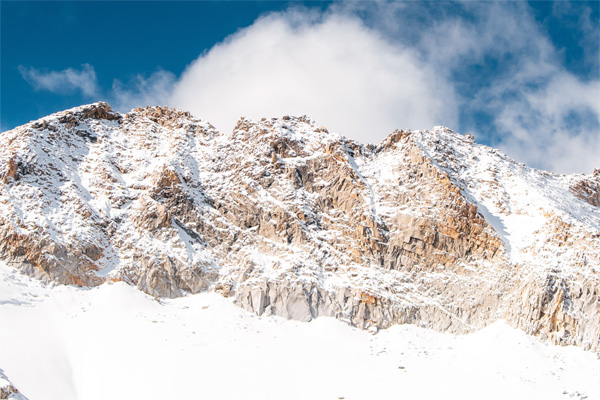
Mountain water (glacial water) is essential to humans and ecosystems. As an important part of the “World’s Water Towers”, mountains are a vital source of freshwater (“When Drinking Water, Remember Its Source”). During colder seasons, mountains store water in the form of ice and snow, releasing it during warmer seasons as a major source of freshwater for people living downstream.
“When Drinking Water, Remember Its Source” means tracing freshwater back to its origins and safeguarding glaciers and water. To protect glaciers and the freshwater resources on which humans depend, we must control temperature rise by reducing emissions, thereby fundamentally “Letting the Glacier Cool” and protecting these frozen water towers. The 2025 United Nations World Water Development Report (UN WWDR) focuses on mountain water resources and their critical role as the planet’s “water towers”. The report emphasises that mountains are essential sources of freshwater and are vital for meeting basic human needs and ensuring food and energy security for billions of people living in mountainous and downstream areas. It also highlights the urgent challenges facing mountain water systems, particularly the rapid changes in the mountain cryosphere caused by global climate change. Accelerating glacial melt, decreasing snow cover and increasing permafrost thaw are making mountain water flows more erratic and difficult to predict.
People living on the “Roof of the World” have a deeper understanding of the value of clean water and pure land. Many ancient glaciers are found across the Qinghai-Tibet Plateau—the Third Pole and Asian Water Tower—and Xinjiang. Although glaciers are magnificent, they become helpless and vulnerable when facing the threat of climate change. Glaciers perform the important function of regulating water in its solid and liquid states through glacier accumulation and ablation. Climate warming caused by greenhouse gases accelerates glacial retreat and increases glacial meltwater across the Qinghai-Tibet Plateau, eventually causing lake levels to rise and flooding grasslands and villages. Conversely, if glaciers disappear because of rapid melting, lakes and oases may become arid, leaving the livestock and local communities that depend on them unable to survive.
More than 2 billion people depend on glaciers and snowmelt for freshwater. Projections indicate that glaciers in one-third of World Heritage glacierized sites could disappear by 2050. Raising awareness and taking action to protect these vital ecosystems are therefore urgent. Against this background, and to mark World Day for Glaciers on 21 March and World Water Day on 22 March, UNESCO and its partners launched the 2025 edition of the United Nations World Water Development Report, Mountains and Glaciers: Water Towers. The report highlights the importance of mountain waters to the planet and aims to raise public awareness of the importance of freshwater to humans and other living organisms. It also promotes Sustainable Development Goal 6 (SDG6)—clean water and sanitation—to address the global water crisis.
World Water Day calls on the public to “Save Our Glaciers—the White Giants, Let the Glacier Cool”. Glaciers and water are intrinsically connected and complement each other. The cryosphere, comprising glaciers, snow, ice and permafrost, plays an important role in regulating the Earth’s climate and maintaining ecosystem stability. It is crucial for regulating sea levels and ensuring the supply of freshwater for billions of people around the world. However, as glaciers and ice sheets melt, the effects ripple across the globe, threatening water supplies and increasing the risk of catastrophic natural events.
Will Legend and the Northwest Institute of Eco-Environment and Resources, Chinese Academy of Sciences Work Together to Protect the “Asian Water Tower” and the “World’s Water Towers”

Across the Qinghai-Tibet Plateau and Xinjiang, the vast glaciers of the Qilian Mountains, Altai Mountains, Tianshan Mountains and Kunlun Mountains form clean sources of glacial water. This region is the source of the Yellow River and the Yangtze River—the mother rivers of the Chinese nation—and the birthplace of 13 major rivers in Asia, including the Mekong, Indus and Ganges. It is also home to the Irtysh River, the only river in China that flows northwards into the Arctic Ocean, originating in the Altai Mountains. The region contains 50,000 square kilometres of lakes, 100,000 square kilometres of glaciers, 300,000 square kilometres of perennial snow and more than 9 trillion cubic metres of water resources. As the survival and development of more than 2 billion people depend on these resources, the region is known as the “Asian Water Tower”. According to traditional Tibetan belief, Mount Gangdise is the “Father of All Mountains” and Lake Manasarovar is the “Source of All Waters”, with all the mountains and waters of the world originating from this place.
The “White Giants” are the guardians of the World’s Water Towers. The Urumqi River originates from Glacier No. 1 near Tianger II Peak in the central Tianshan Mountains of Xinjiang—Tianshan Glacier No. 1. Protecting glaciers is vital to the well-being of communities worldwide. The World Glacier Monitoring Service (WGMS) has selected more than 40 glaciers to represent mountain glaciers around the world, and Tianshan Glacier No. 1 is the only reference glacier located in China. Through the “Let the Glacier Cool” Programme, Will Legend and the Northwest Institute of Eco-Environment and Resources, Chinese Academy of Sciences are promoting the sustainable management of glaciers and water resources to protect the Urumqi River and the “Asian Water Tower”.
The “White Giants”—glaciers and ice sheets—play an essential role in the global water cycle, storing nearly two-thirds of all the freshwater on Earth. They are the World’s Water Towers. “Let the Glacier Cool” calls for global action to reduce greenhouse gas emissions and mitigate climate warming, enabling the “World’s Water Towers” and the “Asian Water Tower” to continue fulfilling the mission entrusted to them by nature—protecting water, an essential element of life for humans and other living organisms.
Build a Cradle of Ecosystem, Nurture Biodiversity
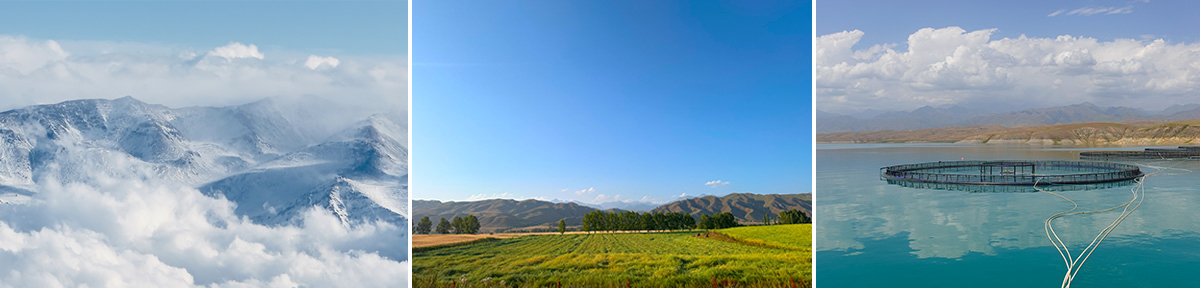
Biological diversity resources are the pillars upon which we build civilizations. Fish provide 20% of animal protein to about 3 billion people; Over 80% of the human diet is provided by plants; As many as 80% of people living in rural areas in developing countries rely on traditional plant‐based medicines for basic healthcare. The United Nations established the Kunming-Montreal Global Biodiversity Framework (also known as the Biodiversity Plan) with the purpose of promoting the belief of harmonious coexistence between humans and nature. It is hoped that different countries, organizations, and sectors can support the implementation of diversity in their own ways.
Regarding biodiversity, it is easier for the public to understand that there are many types of plants and animals, and a large number of microorganisms are included. But it turns out that real biodiversity also includes ecosystems such as glaciers, rivers, forests, lakes, deserts, grasslands and oceans. To put it simply, all species on the Earth are interconnected. Each ecosystem has different connections, interactions and influences, and in the end, a beautiful Earth can be achieved.
Safeguard the last piece of pure land on Earth, let the glacier cool, let the ocean breathe, run through the pulse to wildlife corridor, draw a “Green-blueprint”, build a cradle of ecosystem, nurture biodiversity, make human health and prosperity sustainable. Will Legend protects glaciers and water resources, food and biodiversity, marine ecology and clean air through the Glacier, Land and Ocean Programmes respectively.
Solar Radiation Management Combats Climate Change
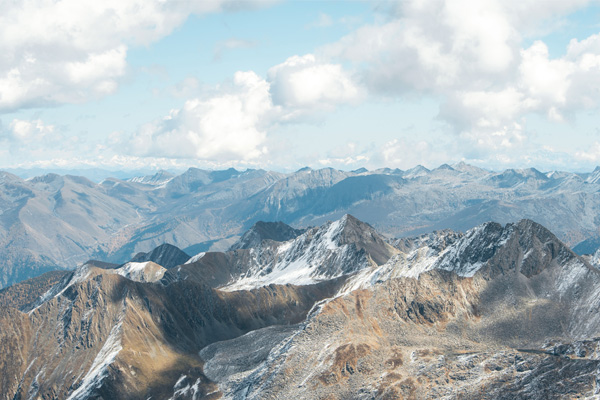
Researcher Wang Feiteng stated that geoengineering currently relies primarily on solar radiation management (SRM) technologies to mitigate the loss of ice sheets and mountain glaciers. This involves increasing the reflectivity of Earth’s surface to solar radiation. This technology has the potential to offset 60% of the radiative forcing caused by a fourfold increase in carbon dioxide levels, thereby counteracting the impact of ice sheets on sea level rise.
In August 2021, professor Wang Feiteng, a researcher at the Northwest Institute of Eco-Environment and Resources, Chinese Academy of Sciences, member of the World Meteorological Organization (WMO) Global Cryosphere Monitoring Program (GCW) Expert Team and Third Pole Regional Climate Service Center (TPRCC) expert team member, led a team to the Dagu Glacier in Heishui County of Aba Tibetan and Qiang Autonomous Prefecture, Sichuan Province to conduct experiments on slowing glacier melting. The energy required for glacier ablation mainly comes from the short-wave radiation of the sun. The absorption of short-wave radiation by glaciers mainly depends on the albedo of the glacier surface. In the two-month experiment, the melting speed of the glacier covered with insulating blankets was significantly slower. Compared with the glacier without any protective measures, the thickness of the melting slowed down to 1 meter.
From June 26 to September 17, 2023, researcher Wang Feiteng , doctoral candidate Xie Yi-Da and other scientific researchers formed a research team. Through field observations and numerical simulations, the study focused on the No. 21 Bailanghe Glacier in the Qilian Mountains and analyzed the coverage and future of the glacier. Differences in the matter and energy balance of the covered area were analyzed in depth. It was discovered that geotextiles could decrease ice melt by up to 1000 mm w.e. in comparison to the surface of glaciers without cover, primarily because of a 23% increase in albedo compared to ice, leading to a decrease in net short-wave radiation and available melt energy. The effect of covering the entire glacier with a geotextile, which has varying albedo properties, was also simulated. It was found that, with every 5% increase in the albedo of the geotextile, ablation was reduced by 10%–25%, resulting in a decrease in ice volume loss of approximately 2.5 × 10⁵ m3. While artificially covering glaciers can reduce ablation rates, it faces challenges such as high costs, environmental risks, and issues with replicability. Ultimately, this study aims to analyze the feasibility of glacier coverage from a mechanistic perspective for glacier management amidst ongoing climate change. (“Advances in Climate Change Research” in October 2024)
The 1st World Day for Glaciers and World Water Day Held at UNESCO Headquarters in Paris

On March 20 to 21, 2025, Chinese Glaciologists, Meteorologists and Expert Representatives, including Professor Yao Tandong, Professor Li Zhongqin, Professor Wang Feiteng etc., attended a High-level Event at the UNESCO Headquarters in Paris to jointly celebrate the First World Day for Glaciers and World Water Day 2025, and Mr. Yao Tandong made a speech for Session 1 – Scientific Research: Cryosphere Observation and Modelling. As part of the International Year of Glaciers’ Preservation 2025, a joint celebration of the World Day for Glaciers and World Water Day highlights the accelerating threat of glacier melt and its impact on water security, communities and ecosystems. With glaciers melting at record rates, the joint celebration will highlight the importance of “White Giants” as guardians of the “World’s Water Tower” for the billions of people who depend on them.
“Let the Glacier Cool” Starts from Xinjiang Tianshan Glacier No. 1 and Sichuan Dagu Glacier

Xinjiang Tianshan Glacier No. 1 is the oldest glacier observed in China, having been observed for over 65 years since 1959. The World Glacier Monitoring Service (WGMS) has selected over 40 glaciers to represent global mountain glaciers, with Tianshan Glacier No. 1 being the only one located in China. As one of the ten glaciers monitored globally, it provides a good indicator of glacier changes in China and across Central Asia.
Glaciers in Xinjiang are primarily continental and mountain glaciers. The glaciers in the Tomur Peak area of the Tianshan Mountains are continental glaciers, characterized by low temperatures, slow accumulation and melting, and relatively slow movement. The glaciers on Muztagh Ata Peak on the Pamir Plateau are mountain glaciers, generally smaller than continental glaciers, developed in mountainous areas, and significantly influenced by topography.
Glaciers in Xinjiang account for approximately 43% of the national total, primarily distributed in the Tianshan, Kunlun, Altai, and Pamir Plateau. Xinjiang’s Karakoram Mountains are the world’s highest, largest, and thickest alpine snow belt. The Pamir Plateau is China’s third-largest mountain range, after the Himalayas and Kunlun Mountains, and is characterized by the development of mountain glaciers.
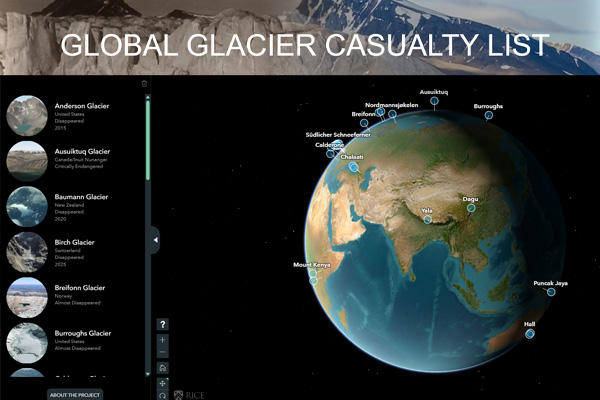
In 2024, Sichuan Dagu Glacier was selected by the World Glacier Monitoring Service and UNESCO as a global priority glacier for rescue. In the same year, the Global Glacier Casualty List (GGCL) highlights 18 renowned glaciers worldwide, chosen due to their impending disappearance and their significant scientific and economic value, to raise awareness on the drastic changes glaciers are undergoing and the urgency of their preservation. Dagu Glacier is the only glacier from China included in the list is projected to disappear by 2030. In May 2025, at the first UN International High-Level Conference on Glacier Preservation held in Tajikistan, the Chinese government delegation cited the protection of Dagu Glacier as a typical case of China’s implementation of UN initiatives.
Let the Glacier Cool, Let the Earth Cool

“Green-blueprint 1.5°C” mitigates climate change (global warming), safeguarding “Glacier, Land, Ocean”. In its 2022 report, UNESCO pointed out that if global warming can be controlled below 1.5°C, it is possible to save the remaining two-thirds of glaciers.
Under the Paris Agreement, countries agreed to significantly reduce global greenhouse gas emissions to keep the long-term global average surface temperature increase to well below 2°C above pre-industrial levels, and to pursue efforts to limit the temperature increase to 1.5°C. The significance of 1.5°C lies in the fact that even a fraction of a degree of global temperature increase can have a significant impact. For some countries and fragile ecosystems, extreme weather events and their associated risks increase with each degree of global temperature increase. The scientific evidence is clear: to avoid the worst impacts of climate change and maintain a habitable planet, we must limit global warming as far as possible and make this a top priority (Intergovernmental Panel on Climate Change).
The increasing emissions of greenhouse gases caused by human activities have led to global warming. The situation is like covering the Earth with a quilt, preventing heat from being reflected into space, causing the Earth’s temperature to rise. Currently, we are experiencing unprecedented rapid climate warming due to human activities, such as the greenhouse gas carbon dioxide produced by burning fossil fuels. As the temperature rises, the Earth also begins to suffer from “fever”. The reason is that everything, and all living things on the Earth are closely intertwined with each other. Once nature loses its ability to balance, humans will not be able to survive alone.
“Green-blueprint 1.5°C” supports green development, fostering green economy, green financing (climate financing), new energy, green industries, ecological tourism, etc., reduce carbon emissions and respond to climate change. Supporting the Belt and Road Initiative to cooperate with developing countries, especially in developing green energy industries (such as solar, wind and hydropower projects, and digital management to increase the proportion of renewable energy generation), agricultural production capacity and ecological construction cooperation, helping traditional industries to achieve green transition, transforming them into green industries and building sustainable business models. At the same time, we also strongly advocate green enterprises, and industry chains to deeply participate in the ESG work of society and the community, on the one hand, to practice corporate social responsibility (CSR), on the other hand, to achieve the policy of corporate economic sustainability, jointly accelerate the green forwarding process, enable the world to reduce carbon emissions faster, achieve the “3060” carbon peak and carbon neutrality goals, and promote the sustainability of humans and nature.
“Green-blueprint 1.5°C” supports the three UN “Rio Conventions” as important cornerstones for addressing the climate crisis. With the nation’s continued development, China has ranked first in power generation capacity in the world. In 1949, the annual power generation was only 4.3 billion kilowatt hours. Today, the figure has reached 9.5 trillion kWh (over 2,000 times growth). What is even more amazing is that renewable energy already accounts for one-third of society’s electricity consumption. As the largest country in photovoltaic power generation, and wind power installed capacity, China’s development of green energy is an important measure to deal with global warming and climate change. Will Legend believes that plans organized and led at the social and community levels can be implemented more effectively. By advocating for the “Integration of Glacier, Land, Ocean”, the “Green-blueprint” connecting the two places and different sectors to take action to address pressing global challenges, allowing the public and future generations to pay more attention to the health of the Earth.
Save the Melting Glacier and Earth’s “Third Pole”
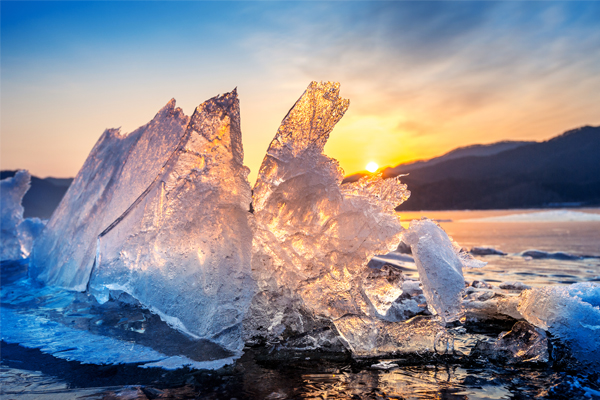
As the Third Pole of the Earth, the Qinghai-Tibet Plateau is the storage of ice and snow second only to the Antarctic and Arctic. Half of the world’s population depends directly or indirectly on glaciers as a source of water for domestic use, agriculture and power generation. Glaciers are also the backbone of biodiversity and support numerous ecosystems. When glaciers melt rapidly, humans are at increased risk of natural disasters such as water shortages and floods. “Let the Glacier Cool” calls for global action to reduce greenhouse gas emissions and mitigate global warming, promotes the United Nations’ “2025 International Year of Glaciers’ Preservation, World Day for Glaciers, World Water Day, and Decade of Action for Cryospheric Sciences” Initiatives. Let the “World Water Tower” and “Asian Water Tower” continue to fulfill the mission given by nature and protect water, an important element of life for humans and living things.
Since 2000, global warming has caused the disappearance of thousands of glaciers around the world. Glaciers at World Heritage Sites are melting at an accelerating pace, with a third of them set to disappear by 2050, according to new research released by UNESCO. These glaciers have been melting at an accelerated rate since 2000 due to rising temperatures caused by carbon dioxide emissions, according to a new study by UNESCO in collaboration with the International Union for Conservation of Nature.
The Urumqi River originates from the Glacier No. 1 near Tianger II Peak in the central Tianshan Mountains in Xinjiang – Tianshan Glacier No. 1. Preserving glaciers is vital for the well-being of individuals and communities worldwide. The World Glacier Monitoring Service (WGMS) has selected more than 40 glaciers to represent mountain glaciers around the world, and Tianshan Glacier No. 1 is the only reference glacier located in China. At the end of the eastern branch of Tianshan Glacier No. 1 at an altitude of about 3,850 meters, there is a huge ice tongue in the valley. The average thickness of the glacier is 50 meters, and the thickest part is 130 meters. Wang Feiteng, director of the Tianshan Glaciological Station, Chinese Academy of Sciences, said that in the past 50 to 60 years, the glaciers here have been melting at a rate of 70 centimeters per year. It can be seen that on this ice tongue, the meltwater of the glacier has formed many large and small streams, which flow into the Urumqi River at the foot of the mountain. Researchers observe the glacier at regular intervals using ground-based 3D laser scanners.
Tianshan Glacier No. 1 is the earliest glacier to be observed in my country, with observations dating back 65 years. As one of the ten glaciers under global observation, it can well reflect the changes in glaciers in China and even the entire Central Asia. In order to better study glacier protection, Wang Feiteng led his team to carry out the first “Covering Glaciers with Blankets” experimental project in August 2023, and has achieved certain results. Currently, this type of experiment is only applicable to small glaciers with scientific research and tourism value. To truly slow down the melting of glaciers and fundamentally protect them, the world needs to work together to support green transformation, green financing (climate financing), clean energy and reduce carbon emissions to protect the environment, life and livelihoods from the worsening impacts of climate change (global warming).
As the third most popular glacier tourism site in China, Dagu is of great economic importance to its region. Sadly, over the past 35 years, Dagu has retreated by 76% and its area of glacial ice decreased from 2.10 km2 in 1989 to 0.5 km2 in 2023. The future is even more concerning. Based on modeling of the measurement data we have gathered over the years, we predict that Dagu Glacier, which currently covers less than 0.5 km², will disappear entirely by around 2030.
The Global Glacier Casualty List (GGCL) project was founded in 2024 through a collaboration between Rice University, the University of Iceland, the Iceland Glaciological Society, the World Glacier Monitoring Service, and UNESCO. The project contributes to the UN’s 2025 International Year of Glaciers’ Preservation. The GGCL aims to remember the names and tell the stories of selected glaciers that are critically endangered or have already disappeared worldwide. Dagu Glacier is included as the only glacier in China and is expected to disappear by 2030.
Worldwide Impact of the Melting Cryosphere (Antarctic, Arctic)
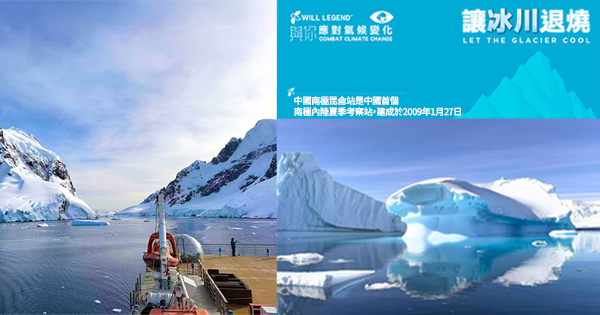
“Let the Glacier Cool” Protects Antarctic
Less Ice, Higher Sea Level. The Antarctic is the southernmost polar region of the Earth, generally referring to the area south of the Antarctic Circle, which includes most of Antarctica and its surrounding islands.
Antarctica, the world’s coldest, windiest and driest continent, has often been referred to as a stable “sleeping giant”, but increasingly extreme temperatures, together with unusual rain and ice shelf shifts, remind us that it must not be taken for granted, the UN Weather Agency (WMO) warned.
Antarctica is the southernmost continent on Earth, located in the Antarctic region of the Southern Hemisphere, and is the geographic South Pole. Most of Antarctica lies within the Antarctic Circle and is surrounded by the Southern Ocean. According to the Intergovernmental Panel on Climate Change, both major ice sheets—Greenland and Antarctica—have been losing mass since at least 1990, with the highest rate of loss occurring between 2010 and 2019. They are expected to continue losing mass.
The World Meteorological Organization (WMO) warns that as a result of the melting of the ice sheets and glaciers, the rate of global sea-level rise has increased since satellite altimeter measurements began in 1993, reached a new record high in 2021.
The Antarctic ice sheet is 4.8 kilometers thick and contains 90% of the world’s freshwater. If it were to melt completely, it would raise sea levels by about 60 meters. “Recent temperature extremes and ice shelf collapses have reminded us that we shouldn’t take Antarctica for granted…Understanding and properly monitoring the continent is therefore crucial for society’s future well-being,” said Dr Mike Sparrow, head of the WMO co-sponsored World Climate Research Programme.
On 8-10 November, 2025, hundreds of representatives from government, research and civil society have been gathered in Paris to discuss the protection of the Arctic and Antarctic. On the last day of the Summit, the Director-General of UNESCO, Audrey Azoulay, announced the official endorsement of a new initiative as an Ocean Decade Action: Antarctica InSync (International Science & Infrastructure for Synchronous Observation).
Antarctica InSync is a programme for synchronous scientific observations in Antarctica and the Southern Ocean to allow for a circumpolar assessment of the connections between ice, ocean, climate, environment and life, including human pressures, and their solutions such as marine protection. It contributes to the Decade Collaborative Centre for the Southern Ocean Region (DCC-SOR) led by the Scientific Committee on Antarctic Research (SCAR).
“This endorsement is in line with the Arctic and Southern Ocean Action Plans developed as part of the Ocean Decade,” explained Audrey Azoulay. “Antarctica InSync, just like these Plans, seek to reinforce scientific cooperation on issues related to polar regions, promote data and knowledge sharing and provide a roadmap for strengthening links between science, industry and decision-making.”
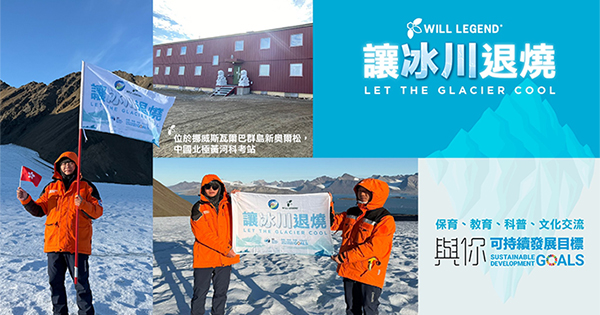
“Let the Glacier Cool” Protects Arctic
Sea Ice Depletion is Accelerating. The Arctic region refers to the area surrounding the Earth’s North Pole, which, together with the Antarctic region, constitutes the Earth’s frigid zones. The Arctic region includes the entire Arctic Ocean and parts of eight countries: Greenland (Denmark), Canada, Alaska (United States), Russia, Norway, Sweden, Finland, and Iceland. It is primarily composed of the Arctic Ocean, an ocean covered by vast sea ice.
The National Centers for Environmental Information (NCEI) stated that every year, the Arctic sea ice cap expands and thickens during winter and then shrinks and thins during summer. In recent decades, increasing temperatures have caused rapid reductions in ice extent in all seasons, but especially at the end of summer.
What scientists refer to as the first ice-free Arctic summer year (FIASY) will occur when the Arctic has less than one million square kilometers of sea ice. (The thick ice sheets surrounding Canada’s Arctic islands are likely to remain for much longer, even in summer.). At the end of summer 2019, the extent of Arctic sea ice measured 4.15 million square kilometers, tying 2007 and 2016 for the second lowest since modern record keeping began in the late 1970s. NOAA tracks ice and other environmental issues on an annual Arctic Report Card.
In the Climate paper, lead author Ge Peng of NCICS and colleagues used twelve climate models to simulate and project the extent of Arctic sea ice under two different emissions scenarios. The scenarios represent midrange (RCP4.5) and high (RCP8.5) projections for the volume of greenhouse gases that will be emitted into the atmosphere in coming decades.
Under the midrange emissions scenario, the twelve climate models settled on 2054 as the likely first ice-free Arctic summer. Under the high emissions scenario, the models suggested it could happen in 2042.
To better collaborate with international organizations and scientists in promoting scientific research and preservation of glaciers and ice sheets, the Polar Research Institute of China (PRI) has established five national scientific observation and research stations in Antarctica: Great Wall Station, Zhongshan Station, Kunlun Station, Taishan Station, and Qinling Station. In addition, it has built the Yellow River Station in the Arctic and China-Iceland Arctic Science Observatory in northern Iceland.
Let the Glacier Cool, Let the Earth Cool. Glaciers and ice sheets are vital for the survival of humans and other organisms. A decrease in glacial water storage will severely impact future water resources for humans and ecosystems, and will also affect sea-level rise. “Let the Glacier Cool” brings the public closer to Antarctica, the Arctic, and the Third Pole, strengthening polar protection. By bridging “Scientific Research, Science Outreach Dissemination, Education Sharing”, Will Legend constructs comprehensive science outreach and educational activities that translate into everyday measures to address climate change, it is a geoengineering initiative in which every member of the society can participate, and it will also be the best human intervention measure to address climate change. Seeking to reduce emissions and lower temperatures at their source, mitigating the climate crisis caused by global warming.
“Let the Glacier Cool” Practicing the Sustainable Development Goals
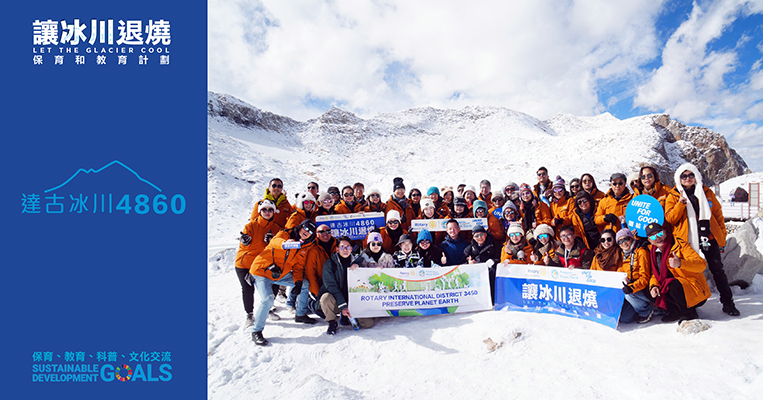
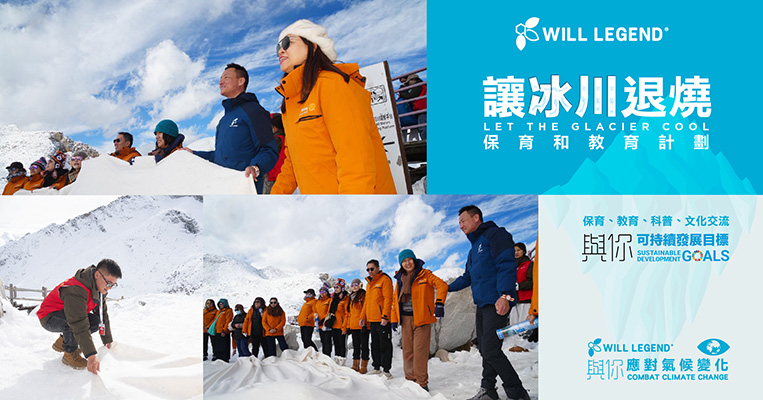
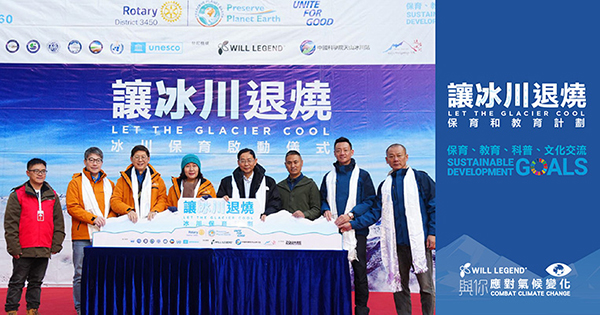
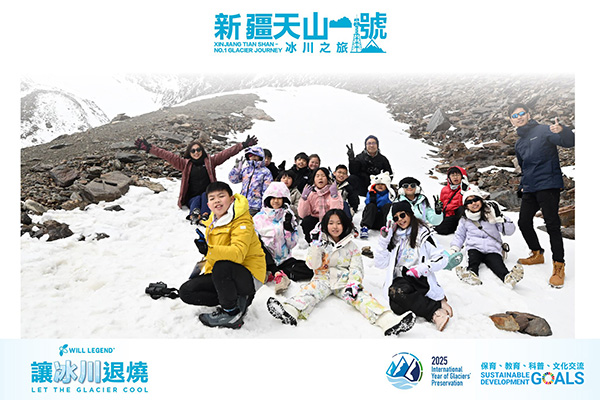


The core of the United Nations Sustainable Development Goal 13 is to take urgent action to address climate change and its impacts. “Let the Glacier Cool” uses diverse models to raise public awareness of glacier conservation. Through practices, the public understands the importance of glaciers in conserving freshwater (drinking water) for humans and organisms, and their contribution as both Asia’s and the world’s water towers.
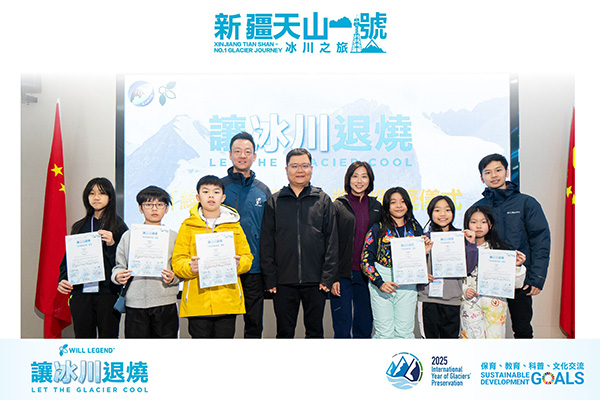
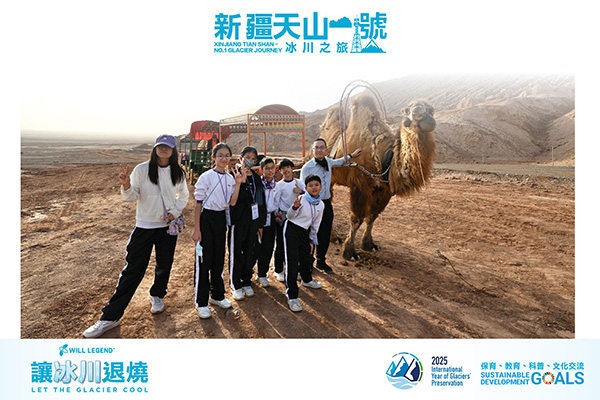
“Let the Glacier Cool” promotes science outreach activities, taking the public on a journey to the Dagu Glacier in Sichuan and the Tianshan Glacier No. 1 in Xinjiang, practicing conservation, education, science outreach, cultural exchange, and sustainable development. Visiting diverse ethnic groups, including Tibetans, Qiangs, Uyghurs, Kazakhs, Hui, Mongolians, Xibes and other ethnic minorities, and local communities and schools, promoting exchange of cultural heritage and landscapes, appreciating ethnic dances, fostering mutual understanding and cultivating the seeds of national unity and cultural integration. A journey to the Tianshan Glacier No. 1 , the source of the Urumqi River, allowing visitors to learn about the source of precious fresh water, experiencing the motherland’s care for the people of Hong Kong, and practicing ““When Drinking Water, Remember Its Source. Same Roots, Same Heart”.
Representatives from participating companies and organizations (institutions), as well as teachers and students, will receive an SDG-in-China™ Academic Study Certificate (Award) jointly signed by Researcher Wang Feiteng, the Northwest Institute of Eco-Environment and Resources, Chinese Academy of Sciences (Xinjiang Tianshan Glacier National Field Scientific Observation and Research Station/ Tianshan Glaciological Station), and William Hung, founder of “Green-blueprint” and “Third Pole Hong Kong Glacier Landmark”.
Apart from embarking on the Dagu Glacier, representatives of enterprise and organization, teachers, and students can also participate in the SDG-in-China™ Science Outreach Activity – 1.5°C-ClimateAction™ “Let the Glacier Cool – Xinjiang Tianshan Glacier No. 1 Journey”, to experience the philosophy of “Integration of Glacier, Land, Ocean”, and practice sustainable development of Humans, Society, Economy and Nature. Click here to read more.
“Willy Bee – The Journey of Glacier, Land and Ocean” Conveys the Philosophy of Harmonious Coexistence between Humans and Nature
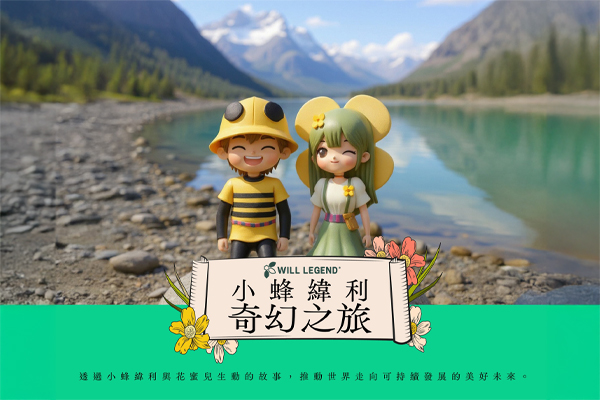
Will Legend looks forward to everyone joining the “The Legend of Will”. We hope that everyone will gain wisdom on this legendary journey and connect to a sustainable future for mankind!
“Willy Bee – The Journey of Glacier, Land and Ocean” is a storybook written by William Hung (Founder and CEO of Will Legend). The story uses education as its starting point, paints as its medium, and climate change as its goal, promoting a peaceful, healthy, and prosperous society. Through the journey of Willy Bee and Flowery across the “Third Pole Glacier Journey”, highlighting the need to protect not only glaciers but also land and oceans, safeguarding the health of the Planet Earth holistically. The storybook conveys the philosophy of harmonious coexistence between humans and nature, to children, young people, and the public, driving the world towards a bright future of sustainable development.
The book consists of three chapters, with SDG experiential learning appendix. The content is suitable for kindergarten, primary, and secondary school students. Its epic, vivid, and engaging storytelling makes it an ideal choice for parent-child reading. Through a fantastical journey and engaging characters and scenes, the story conveys to every citizen of Earth the message that protecting the land is equivalent to protecting food, protecting the ocean is equivalent to protecting the air, and protecting glaciers is equivalent to protecting water resources. Water, food, and air are the most vital elements for human life and indicators of the “health” of the entire planet.
Glacier and Water. Perhaps we have not yet felt the immediate threat. But imagine if all the mountain glaciers — the “World’s Water Towers” disappeared, and the ice sheets at the Antarctica and the Arctic were completely depleted., as a coastal city, could Hong Kong, and other low-lying countries on Earth, escape the threat of rising sea levels and flooding? Therefore, protecting the glaciers of Antarctica, the Arctic, the Third Pole, and the mountains is one of humanity’s most pressing challenges. This is the creative background for “A Legend of Will” a journey across the Qinghai-Tibet Plateau, starting with the No. 1 Glacier in the Tianshan Mountains of Xinjiang and the Dagu Glacier in Sichuan, to tell the story of Hong Kong’s glaciers and save the Earth’s vital glaciers. This also protects vital elements for human life—water, food, and air.
Land and Food. Land occupies about one-third of the Earth. It is the source of human life, and the cradle of human civilization. Forests cover nearly 31% of the global land area and are home to more than 80% of terrestrial animal, plant, and insect species. With urban development and increased pollution, the overuse of toxic pesticides in cultivated areas, green spaces, and areas where humans and animals coexist is severely impacting terrestrial ecosystems. Bees play a vital role in addressing global food security and eradicating hunger in developing countries. Willy Bee encourages the public to work together to plant flowering plants, protect bees, and create “Urban Wildlife Corridor” in and around cities to promote biodiversity and ensure food harvests. The public can contribute to protecting the health of terrestrial ecosystems through “Sustainable Health Service” as a everyday measure to address climate change. In doing so, we are also protecting the health of the Earth and the future of humanity.
Ocean and Air. The ocean covers over 70% of the Earth, supporting human life and every living thing on Earth. It exhales at least 50% of the Earth’s oxygen and absorbs approximately 30% of its carbon dioxide, mitigating the effects of climate change. The meltwater from the Tianshan glaciers turns into an ice lake, which nurtures the gifts “Seafood” from the ocean. Meltwater from glaciers creates an “Ocean on Land,” nurturing the “farthest from the ocean” sustainable fisheries (sustainable fisheries development). This reduces the burden on the ocean, helps increase incomes for local people, and accelerates rural revitalization and rural development. Glaciers and land collaborate to protect a healthy ocean, “Let the Ocean Breathe”. Glacier meltwater nurtures healthy “Land and Food”, and creates “Ocean and Air”, ocean breathes and preserves “Glacier and Water”. Nature is a chain of links.
“Willy Bee – The Journey of Glacier, Land and Ocean”
Chapter 2: Willy Bee and Flowery Across the Ocean (Ocean and Air)