


“Home for Bees” Conservation & Education Programme
A home for bees. A future for us all.
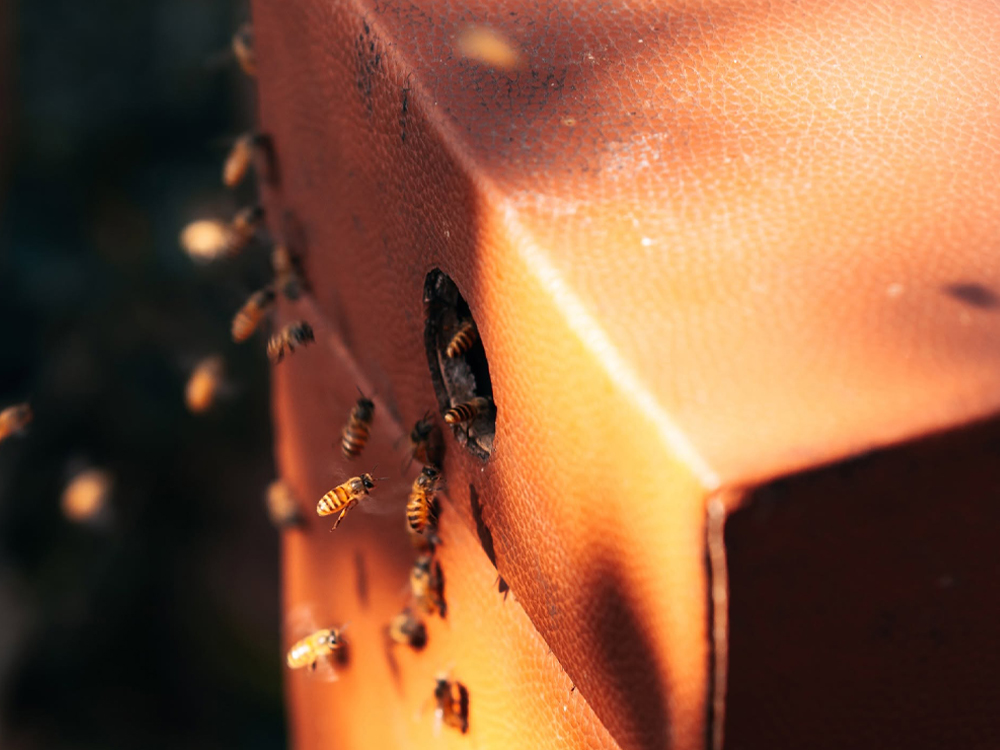
When a bee appears in the city, our first thought may be: “Should we drive it away?” Will Legend invites us to think one step further. It is simply carrying out its role in nature—pollinating flowering plants. Can we protect residents while also giving bees a chance to live and continue contributing to our shared future?
The “Home for Bees” Conservation and Education Programme begins with understanding bees and learning to live alongside them. Where a colony conflicts with everyday activity, we work with experienced conservation partners to assess the site. The programme connects with “Urban Wildlife Corridor” and “Sunflower Biodiversity Charging Station”: one flower and one bee can open a conversation about land, food and biodiversity.

What does one bee have to do with our daily lives?
The food we enjoy depends on the combined work of land, plants, insects and people. Bees and other pollinators visit flowers, help many flowering plants reproduce and contribute to the production of many crops. Protecting bees is about more than honey. It is about recognising their relationship with plants, food and our lives.
In cities, bees may nest near pavilions, drains, trees or buildings. Residents’ safety comes first, but a colony does not always need to be destroyed. Every site is different. A conservation partner should assess the location, surrounding environment and how the space is used. If a colony can safely remain, leaving it in place may be an option; where relocation is needed, its care should follow the site assessment.
A flower awaits the sun
A bee seeks the smell of flowers
“I love doing something to help nature and society, not just for now, but also for the future.”
William Hung · Founder and Chief Executive Officer, Will Legend
From a Hong Kong park to a wider conversation about nature
Will Legend founded the “Home for Bees” Conservation and Education Programme on 20 May 2021. That date is also the United Nations World Bee Day. We chose it to bring bee conservation into public conversation and open a familiar route to understanding biodiversity and food. Two days later, on 22 May, the International Day for Biological Diversity reminds us to consider bees alongside plants, habitats and other forms of life.
The programme speaks to UN Sustainable Development Goal 15: Life on Land through pollinators, flowering plants and habitats. It also connects with Goal 11: Sustainable Cities and Communities by considering the needs of residents and nature in urban spaces. The Kunming–Montreal Global Biodiversity Framework provides a longer-term global direction. One talk or one relocation does not fulfil these global goals, but it can help more people understand them and take part.
In Will Legend’s Green-blueprint, bees represent an action we can begin on land. “Home for Bees” is an important part of “Urban Wildlife Corridor”, the land programme within Will Legend’s “Green-blueprint”. Glaciers and water, land and food, and oceans and air are interconnected. A flower and a bee can help city residents see why nature matters in everyday life. Sustained progress also calls for education, habitat care, less pollution and continued participation.
Putting the idea into practice
Lai Chi Kok Park: three site cases, two successful relocations
Will Legend and its bee conservation partners worked on three colony cases at Lai Chi Kok Park: 15 May 2023, 31 May 2023 and 12 May 2024. The nests were located at a pavilion, a drain and a tree; each location is listed without a date-specific attribution. In two cases, the colonies were successfully relocated to a partner centre for observation. After the partner confirmed the colonies’ overall health, they were released into the wild. In the other case, site conditions prevented recovery of the colony; the park then undertook its own reassessment of how to handle it.
The case where relocation was not possible raises a question. A park offers flowers and food, so it is natural for bees to seek a place to nest there. Have bees entered our city, or has urban development changed the places where they used to live? Every case brings different constraints. We seek a balance that protects residents and, wherever possible, gives bees a suitable path to continue living.
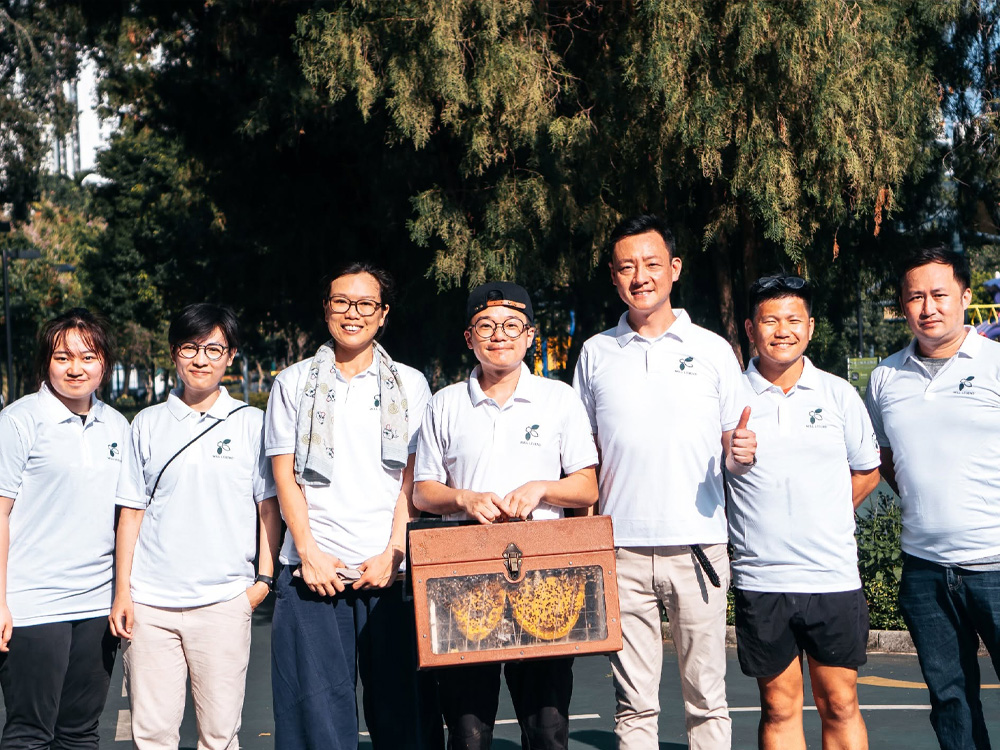
15 May 2023 · On-site record
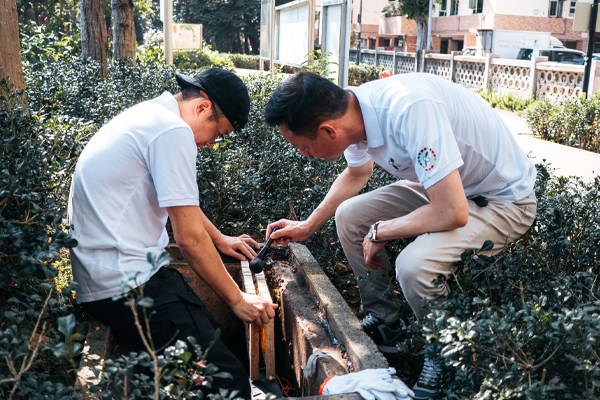
31 May 2023 · On-site record
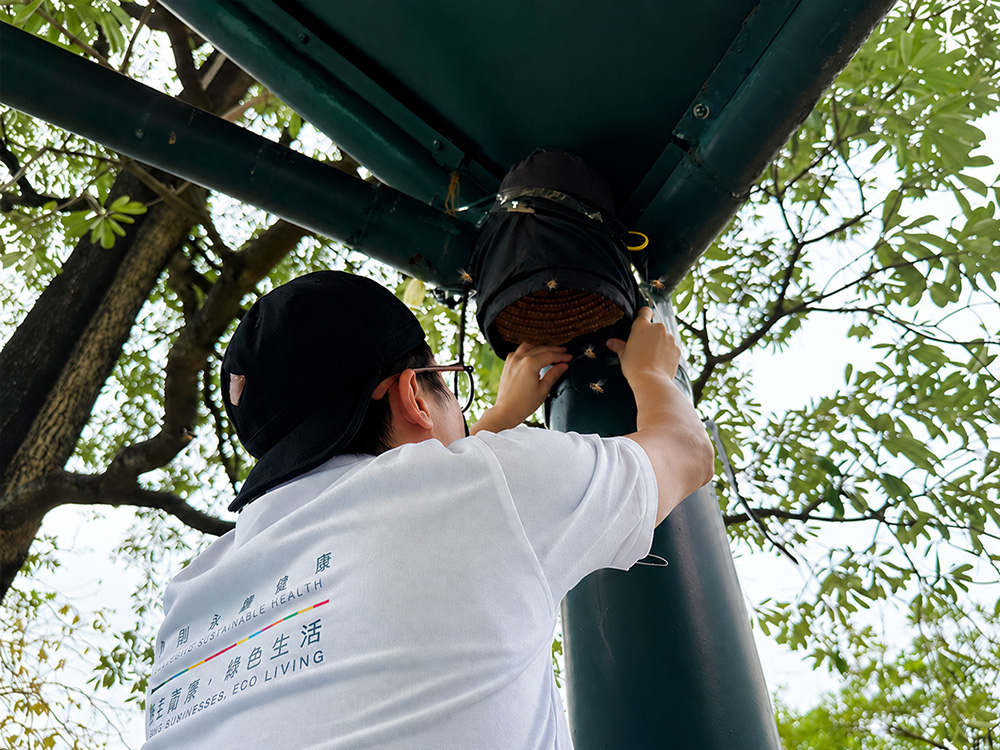
12 May 2024 · On-site record
Photos are identified by date only. A specific nest location or outcome is not attributed to a particular photograph.
Taking the story of bees into schools and communities
Through green school talks, World Bee Day activities and public education, Will Legend helps students and the public learn about pollination, flowering plants and urban biodiversity, while addressing questions about bee colonies and safe responses. “Home for Bees” works alongside school education through “Urban Wildlife Corridor” and planting and observation through “Sunflower Biodiversity Charging Station”, moving from awareness to participation.
Connecting Hong Kong with beekeepers in the mountains
Since 2023, Will Legend has continued to purchase honey from beekeepers in the Dagu Glacier area of Sichuan. These purchases support local livelihoods and connect bees, flowering plants, mountain communities and care for others through honey. Honey has been given to churches and schools and shared with neighbours, older people and cleaners. Community activities in 2024 and 2025 included honey, fruit and food. These records document purchasing and giving; ecological outcomes such as colony numbers, forest regeneration or crop yields would require separate measurement.
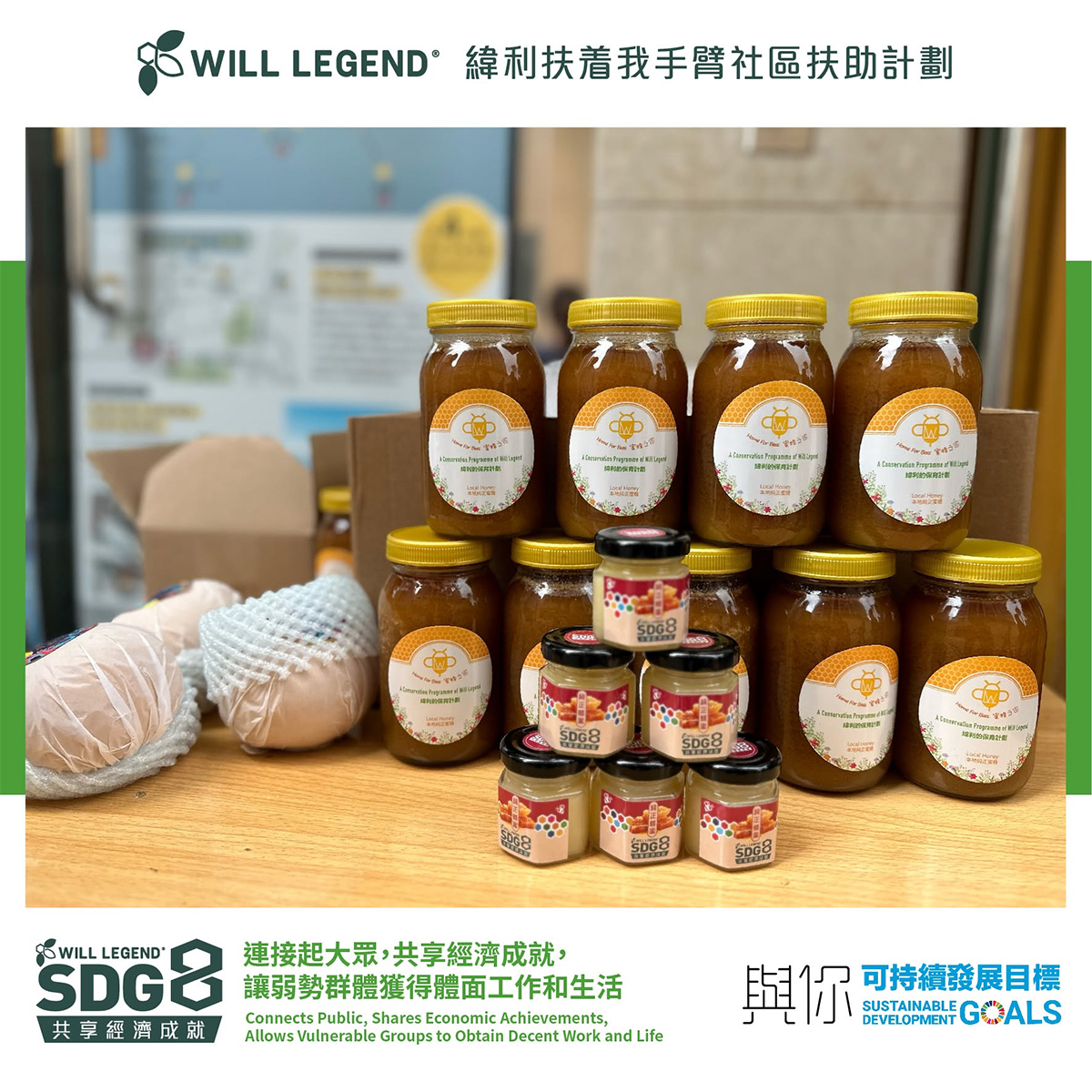
Example of honey gift packaging · Not for sale. Different jars in this photograph should not all be described as one glacier honey product.
World Bee Day talks and staff or student participation
Begin with one flower and one bee to explore pollination, urban biodiversity and everyday life. A programme can align with Earth Day, World Bee Day, World Environment Day, staff engagement or school activities, and include Green-blueprint and Willy Bee® educational films, music videos, Q&A or observation. Deliverables may include concept development, talks, activity coordination and participation records.
Site assessment and bee conservation education
If a colony is found at a shopping centre, residential estate, school or office, Will Legend can coordinate with a conservation partner. The partner assesses the nest location, surroundings and foot traffic, and provides a report before suitable steps are discussed. Education for site managers, staff or students can be added. Scope, responsibilities, timing and fees are agreed case by case.
Flower-to-bee activities at schools and workplaces
Working with “Sunflower Biodiversity Charging Station”, arrange the growing of flowering plants, pollinator observation and follow-up learning in suitable gardens, terraces or rest areas. Businesses may develop a Sunflower Week or Month; schools can connect the activities to lessons and observation records.
Books, IP learning gifts and glacier honey giving
Businesses and organisations may sponsor printing of Willy Bee® books or making educational stationery for schools. They may also commission or sponsor honey gifts linked to beekeepers’ stories and pollination education. Glacier honey and partner-specific labels are options to discuss; origin, design, labelling, quantities and delivery will be agreed for each project.
From Caring for Bees to Exploring Beekeeping in Xinjiang
Making space for bees in the city can be the beginning of a wider understanding of nature. Xinjiang’s flowering landscapes and beekeeping communities offer opportunities to learn about pollination, how beekeepers work with nature, and the people and stories behind a jar of honey.
Businesses, organisations and schools can commission Will Legend to connect bee conservation talks, educational films and music videos, beekeeper visits, support for schools in Xinjiang and the Glacier Journey. Partners can contribute to education and community support while helping employees or students move from questions about urban bees to first-hand learning about bees, flowers, water and everyday life. Will Legend can contribute educational programme design, local partner connections, visit and exchange arrangements, and story and impact communication.
The itinerary and visits are agreed around the season, route and hosting arrangements.
Helping the purpose and the work continue
Conservation takes specialist partners, education content, coordination time and sustained resources. When businesses, organisations and schools commission Will Legend to design and deliver a project, they receive an activity shaped around their goals. That work also gives our team and partners a way to continue science communication and environmental education.
The programme does not claim that one activity changes an entire ecosystem. What matters is that participants see a bee, understand its relationship with a flower and our food, and know how they can take a next step. Purpose leads to a programme; real cases build trust; a new partnership makes further work possible.
Have a clear goal?
Let us design the next bee conservation and education project together.
Tell us whom you would like to involve, your timing and resources. Commission Will Legend to co-design talks, planting or bee education, support for schools in Xinjiang and the Glacier Journey around your goals.