


LAND · FOOD · BIODIVERSITY
“Sunflower Biodiversity Charging Station” Conservation and Education Programme
One flower brings the city and nature together

A seed falls into the soil. A bee seeks the smell of flowers.
A child places a seed in the soil. Days later, a shoot appears; in time, a flower turns towards the sun. This familiar sequence invites another question: what do bees and butterflies need when they visit a flower? Does the city where we live leave room for them?
Planting & care
Biodiversity education
01 / THE IDEA
Why call it a “charging station”?
Through the “Sunflower Biodiversity Charging Station”, Will Legend invites schools, businesses, institutions and the public to plant, care for and observe flowering plants. Along the way, participants explore the links among flowers, pollinators, food and biodiversity. One flower can begin a learning journey. Suitable plants, sustained care and connected green spaces can gradually make our cities more welcoming to nature.
Roads and buildings divide many urban green spaces. Bees, butterflies and other pollinators need places to find nectar, pollen and suitable habitat. “Charging station” is an easy-to-grasp metaphor: suitable planting in schools, terrace gardens, outdoor rest areas and other places can give flowers and insects more opportunities to meet.
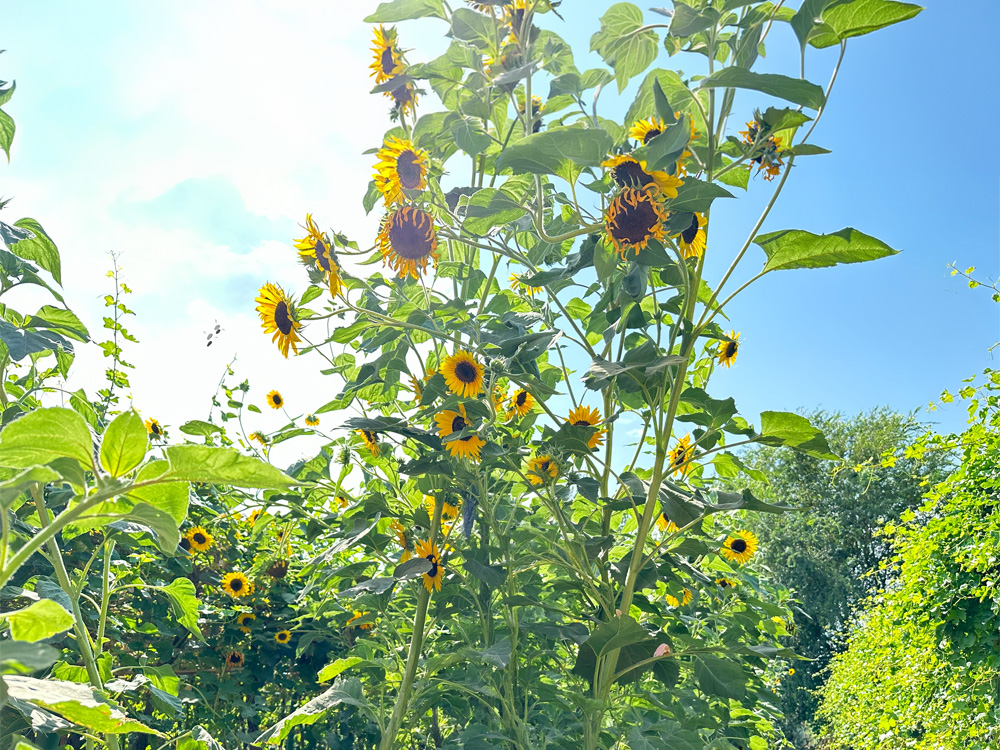
Sunflowers make it easy to observe a plant from seed to shoot, leaves, flower and seed head. The programme is not limited to one species. Planting choices should reflect the site, season, sunlight, local ecology and the care available afterwards. A single flower can help people begin to observe and care for nearby nature.
Flowers provide nectar and pollen. Pollination supports plant reproduction; the programme connects these relationships with forest regeneration, habitats, food and biodiversity.
02 / GREEN-BLUEPRINT
From one flower to land and daily life
Our food, water and air all depend on natural systems. Some flowering plants and crops rely on bees and other animals for pollination. When children care for a plant, they can discover how flowers, insects, soil, food and people are connected.
The programme is part of the land-focused work in Will Legend’s Green-blueprint. It connects with the “Urban Wildlife Corridor” Green School Talks and bee conservation through “Home for Bees”. Glaciers and water, land and food, oceans and air affect one another. One flower gives city residents a tangible place to begin, then opens a conversation about caring for Earth as a whole.
It is an important part of “Urban Wildlife Corridor”, the land programme within Green-blueprint.
Green-blueprint brings together environmental protection, social philanthropy and ethnic integration. It provides resources for scientists, sponsors students and brings economic momentum to rural and mountainous communities, practising the “Sharing of Economic Achievements”.
Related land actions include reducing pollution through WillNature® low-carbon, non-toxic products and Sustainable Health Service.
Green-blueprint is the world’s first initiative integrating glaciers, land and oceans to mitigate climate change.
It pursues the integration of humans, society, economy and nature.
When flowers are growing everywhere
When cities connect with forests and green corridors
There is hope for the future
♪ GREEN-BLUEPRINT · LYRIC EXCERPT
“I love doing something to help nature and society, not just for now, but also for the future.”
William Hung
Founder and Chief Executive Officer, Will Legend
03 / BIODIVERSITY
A flower connected to global conservation goals
Will Legend established the programme on 22 May 2021, the United Nations International Day for Biological Diversity. World Bee Day is observed on 20 May. The programme’s planting and education work aligns with the themes of UN SDG 15, Life on Land, and the Kunming-Montreal Global Biodiversity Framework. These connections explain why sustained learning and participation matter.
CEO William Hung is the founder. The date was deliberately chosen to highlight biodiversity as the foundation of coexistence and sustainable development.
International references
04 / REAL WORK
From sowing seeds to visiting schools
Since October 2022, Will Legend has brought sunflowers into Hong Kong secondary schools, primary schools and kindergartens through the “Urban Wildlife Corridor”, helping students learn about bees and urban nature through a plant they can see and care for.
In 2023, the “Urban Wildlife Corridor” Green School Talks visited S.K.H. St. Andrew’s Primary School, S.K.H. St. Matthew’s Primary School, S.K.H. Chi Fu Chi Nam Primary School, Po Leung Kuk Mrs. Chan Nam Chong Memorial Primary School, Ling To Catholic Primary School, Cumberland Presbyterian Church Yao Dao Secondary School and W F Joseph Lee Primary School. Talks complemented planting, observation and World Bee Day activities, giving students opportunities to explore the relationships between plants and pollinators firsthand.
In the education film, William speaks to teachers and students about protecting bees and planting sunflowers. He also reflects on unequal access to learning opportunities. His own experience of limited resources helped inspire the “Take Me to School” education sharing programme. The two programmes share a concern for giving children opportunities to learn and participate. Schools, the team and partners make the work possible together.
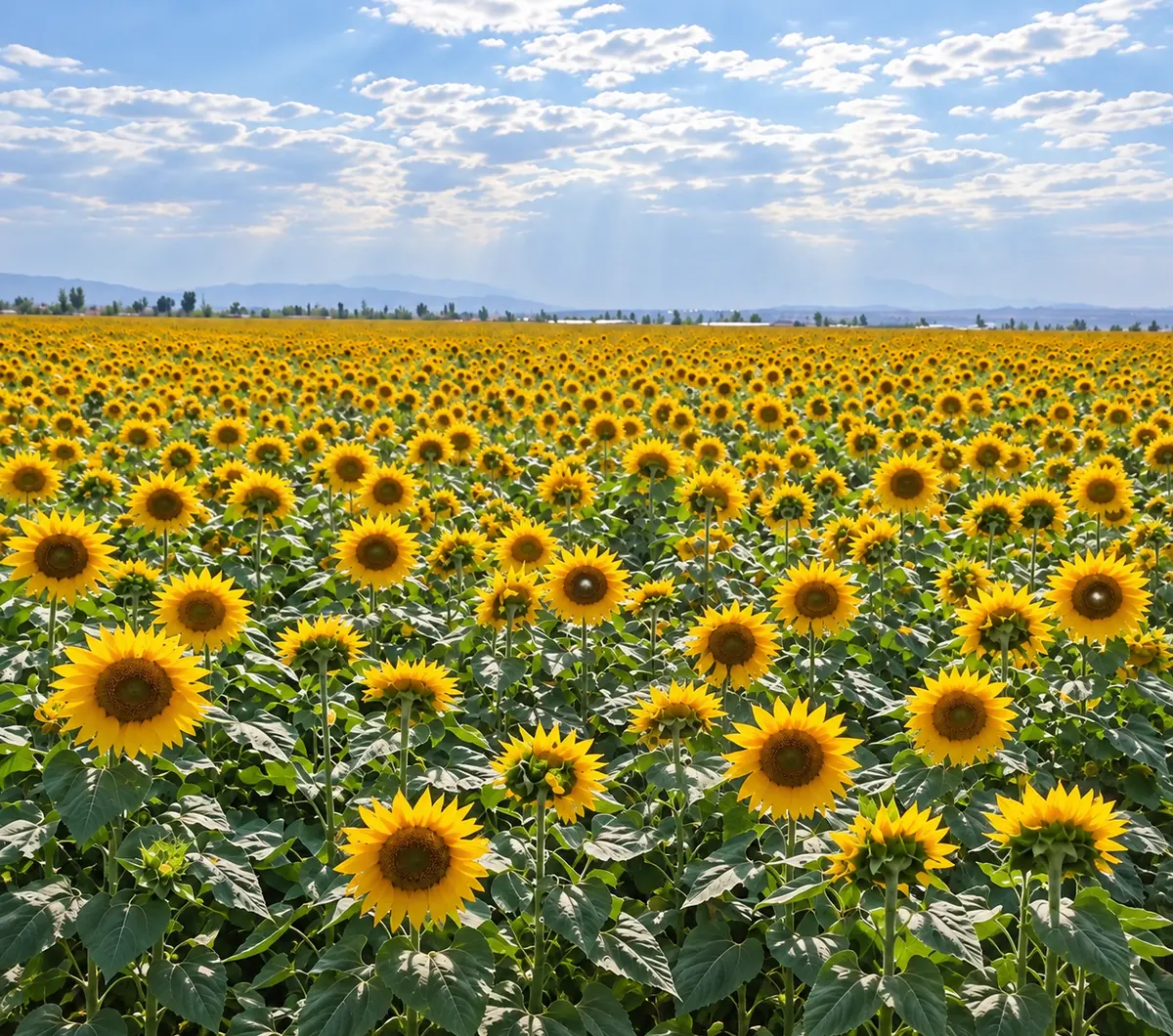
Sunflowers in bloom in Xinjiang
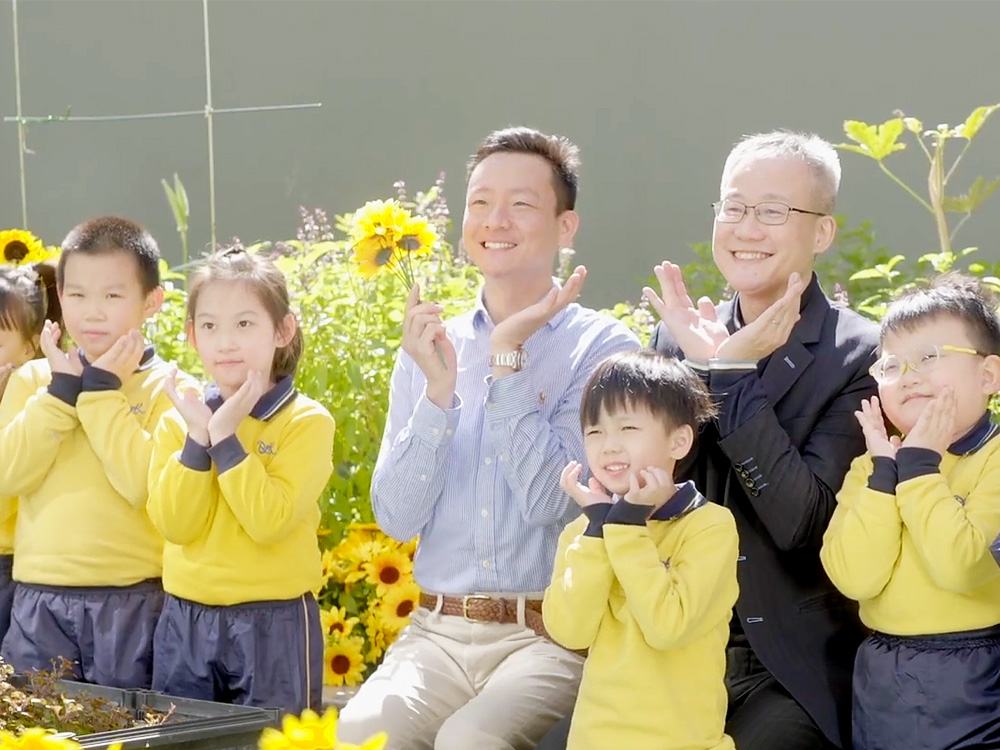
Photo with students beside sunflowers at school
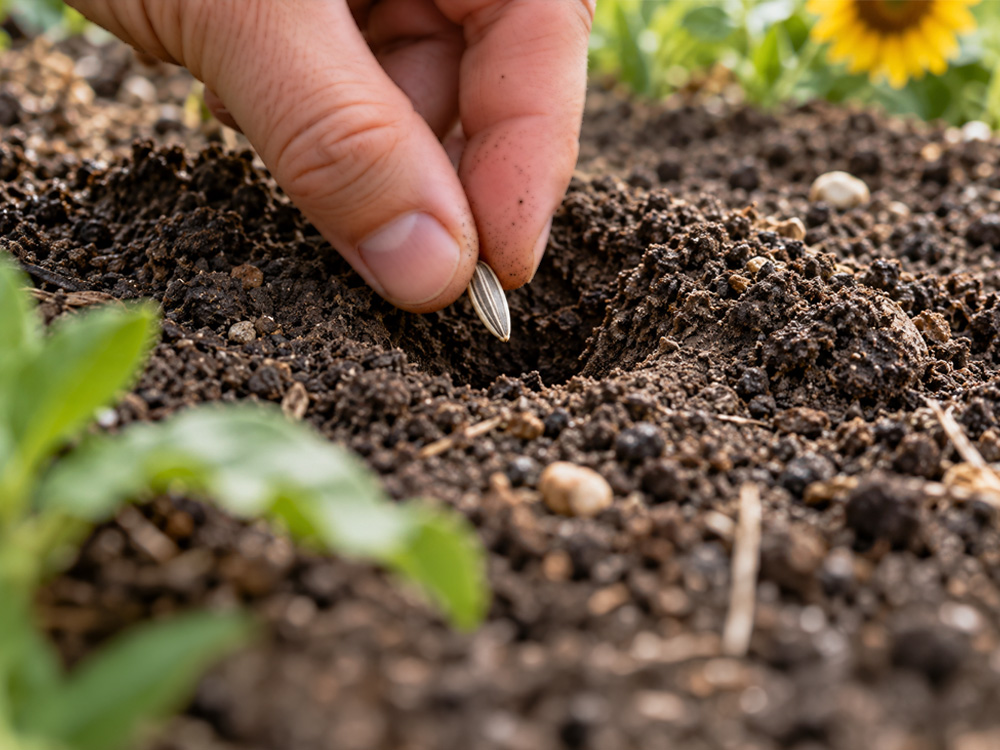
Planting a sunflower seed in the soil
Watch the “Urban Wildlife Corridor” school education film
05 / WAYS TO COMMISSION
How can businesses, institutions and schools take part?
Start with a talk, or build a longer programme around your audience, site and goals. Will Legend agrees roles, budget, timing and deliverables with each partner before a project begins.
01
Biodiversity talks
Begin with one flower and one bee. Talks can include questions, observation, the “Green-blueprint” song, a Willy Bee® education film or music video.
Businesses can also participate through a Corporate ESG Goals Exchange Meeting.
02
Sunflower week or month
Turn Earth Day, World Bee Day, the International Day for Biological Diversity, World Environment Day, employee engagement or team building into planting, care and observation activities.
03
Planting at schools and workplaces
Plan the planting of suitable flowering plants in schools, outdoor rest areas, terrace gardens or rooftops, alongside learning and follow-up care.
04
Sponsor school learning resources
Support planting materials, print Willy Bee® books or create story-based educational stationery for schools according to their needs.
“Willy Bee-The Journey of Glacier, Land and Ocean”
05
From green corridor to glacier journey
Extend a talk and planting activity into field learning in Xinjiang or another suitable location, including a beekeeper visit where arrangements permit. Explore the links among water, land, flowers, bees and communities.
06 / THE STORY CONTINUES
Let the story of one flower keep growing
The “Sunflower Biodiversity Charging Station” connects planting with sustained learning and participation. We hope participants will care for a plant, observe its relationship with insects and the environment, and see that nature is connected to everyday life, food and the future.
Through science communication, Will Legend brings this understanding into schools, workplaces and communities. Commissions from businesses, institutions and schools enable genuine participation and provide ongoing resources for educational content, professional collaboration and conservation work.
WILL LEGEND · SDG PARTNER
Start the next project with your goal
Tell us whom you want to engage, where and when, and what you hope to achieve. Will Legend can explore a suitable talk, planting activity, learning resource or field experience with you.