

World Premiere | Conference Song | Explore the Glaciers of the Mainland of China
Bring your brand into glacier conservation and education projects. Let a glacier story become the starting point for your next education and sustainability initiative.
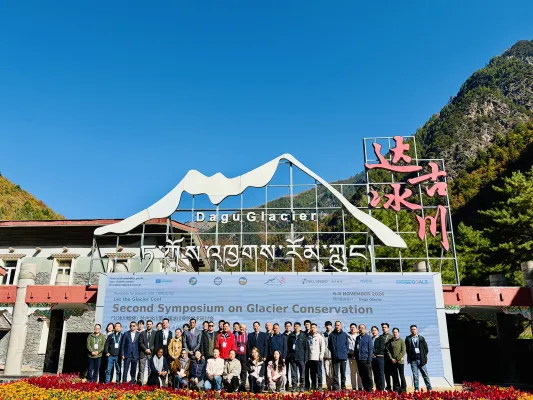
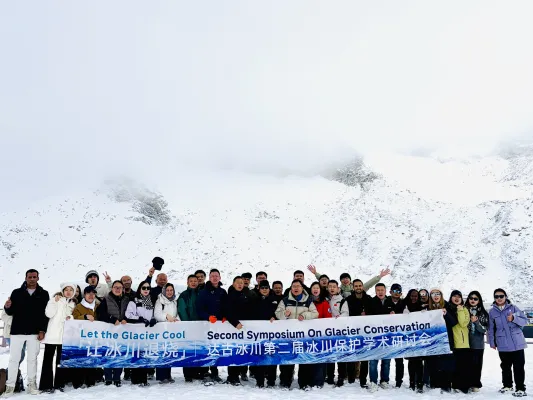
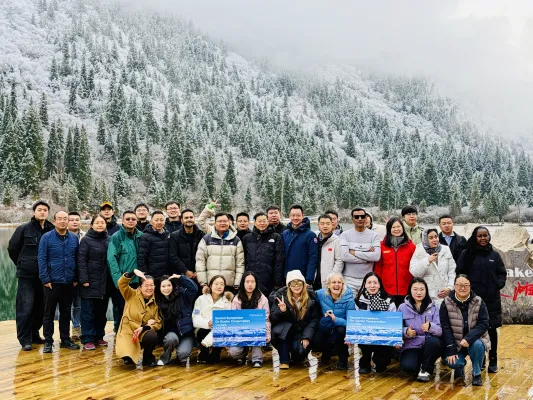
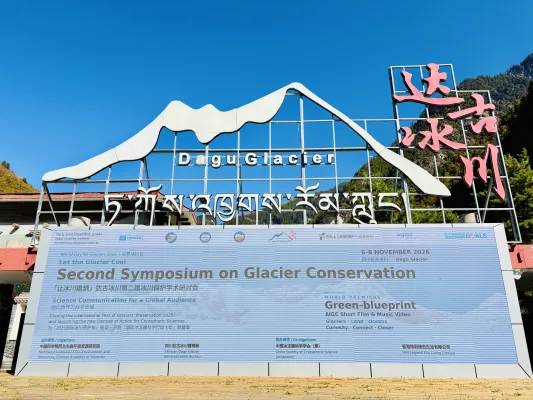
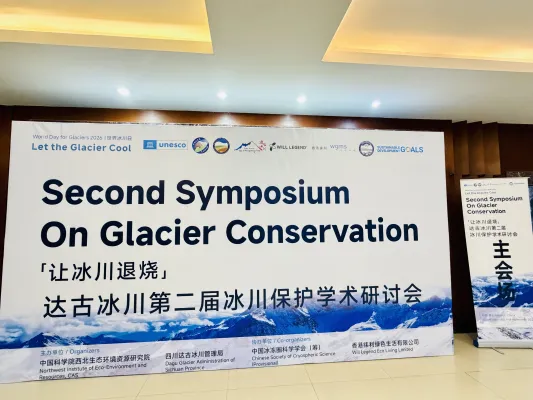
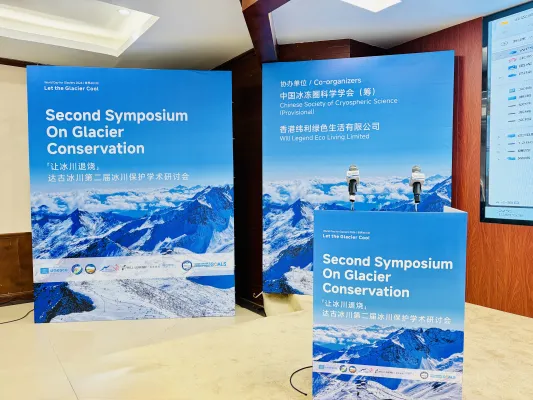
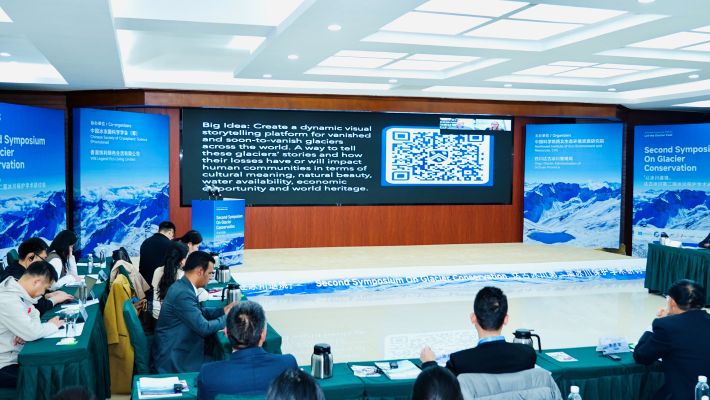
The “Let the Glacier Cool” Second Symposium on Glacier Conservation and associated field activities took place at Dagu Glacier, Sichuan, from 6 to 8 November 2026. Scientists, scholars and representatives from related fields exchanged perspectives on glacier change, conservation measures, water governance, expedition safety and science communication. Discussions explored how research, education and public participation can work together to bring glacier conservation knowledge to a wider audience.
The symposium brought together more than 100 participants, including glaciologists, climate policy experts and representatives of international organisations from the Mainland of China and countries including the United States, Norway, Tajikistan and Pakistan.
The symposium was organised by the Northwest Institute of Eco-Environment and Resources, Chinese Academy of Sciences, and the Dagu Glacier Administration of Sichuan Province. Will Legend (香港緯利) and the Chinese Society of Cryospheric Sciences (proposed) served as co-organisers. The programme included registration and preparatory exchanges, academic presentations, glacier science education and field visits.
International attention to glaciers and cryospheric sciences provides an important context for these discussions. According to the programme announced by UNESCO, the World Meteorological Organization (WMO) and the International Year of Glaciers’ Preservation (IYGP) community, the World Day for Glaciers and World Water Day celebrations took place at UNESCO Headquarters in Paris on 18–19 March 2026, marking the close of the International Year of Glaciers’ Preservation 2025 and the transition to the Decade of Action for Cryospheric Sciences 2025–2034. Dedicated sessions and side events highlighted the vital connections between the cryosphere, water and gender equality.
The Dagu symposium’s focus on glacier change, conservation, water governance and public communication resonated with this international agenda. It provided a platform for participants from different regions and professional backgrounds to explore connections between glacier research, education, public participation and practical action.
Invited to serve as a co-organiser for the second time, Will Legend contributed conference visual design, bilingual materials and educational storytelling.
The symposium also hosted the world premiere of the Green-blueprint short film, while the theme song from its music video served as the conference song, introducing additional ways to communicate science to the public.
1. Nine Presentations Connecting Glacier Research with Society
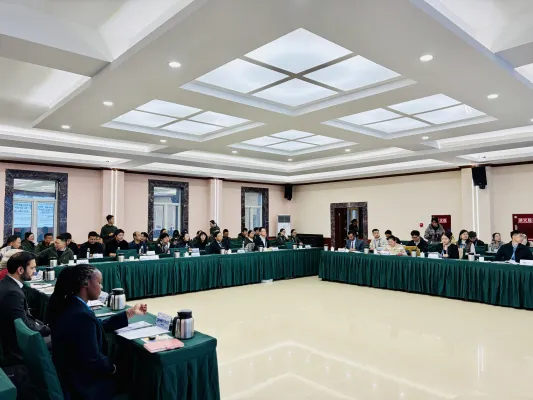
The symposium brought together perspectives from natural science, social and cultural research, education, communication and practical fieldwork. Nine speakers addressed glacier change and its impacts, conservation measures, polar storytelling, water governance and science communication.
The following speaker introductions and presentation titles are drawn from the conference materials. Some English titles are translations from Chinese and are provided for reference.
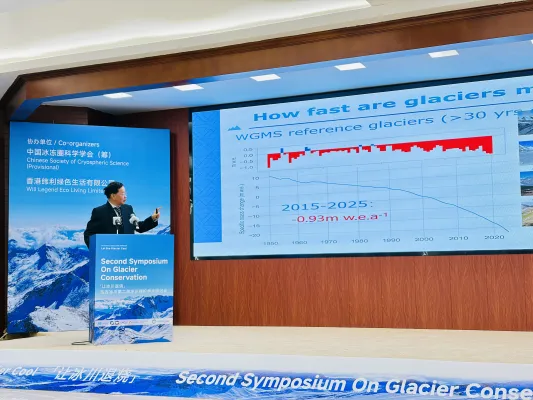
【Zhongqin Li|李忠勤】
Professor Li’s work focuses on glacier monitoring and water resources in arid regions. He serves as the Chinese national correspondent for the World Glacier Monitoring Service (WGMS) and academic lead of the Tianshan Glaciological Station.
Presentation:
Global Glacier Changes and the Associated Impacts Across China
The presentation addressed glacier change and its associated impacts at global and Chinese scales, providing a research context for the symposium’s conservation discussions.
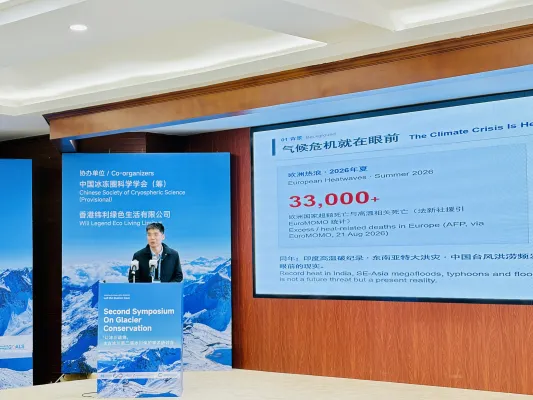
【Dominic Boyer】
Professor Boyer is a professor of anthropology at Rice University in the United States. His work examines the social and cultural significance of glacier loss, including involvement in the Global Glacier Casualty List (GGCL) and public communication through commemorative activities.
Presentation:
The Global Glacier Casualty List (GGCL): An Introduction and Glacier Conservation in China
The presentation extended the discussion of glaciers into social memory and culture, offering another perspective on understanding glacier loss.
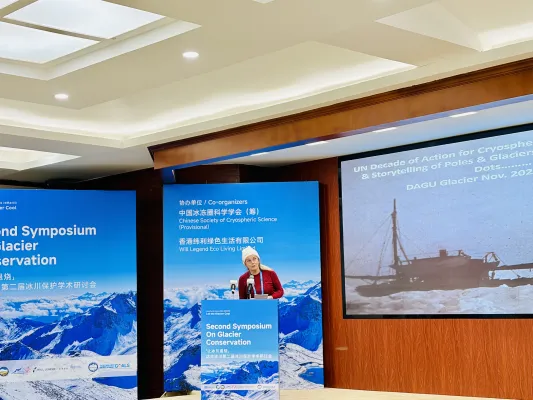
【Rigmor Kristin Johnsen|梅園梅】
An honorary board member and senior adviser at Norway’s Polar Hub, Johnsen connects scientists, artists and media through storytelling and interdisciplinary exchange on polar issues.
Presentation:
Storytellers and Storytelling about Poles and Glaciers and Ice ~ Connecting the Dots
The presentation focused on ways of telling stories about polar regions and glaciers, exploring how different disciplines can contribute to public communication.
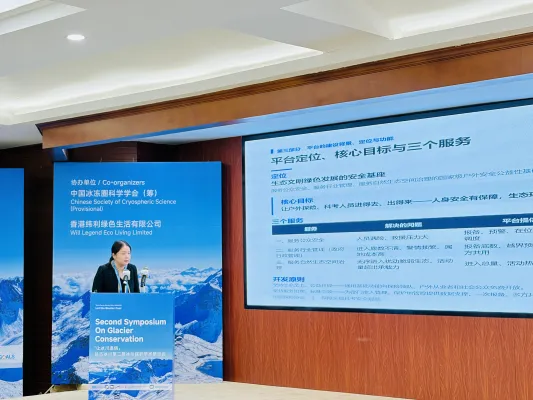
【Aijun Yan|閆愛軍】
Yan is a research-level senior engineer and doctoral supervisor at Xi’an Thermal Power Research Institute, with research interests including solar radiation intervention.
Presentation:
Surface Albedo Intervention: An Option for Addressing Climate Overshoot
The presentation introduced research approaches to surface albedo intervention in the context of climate overshoot.
【Ning Xia|夏寧】
A project director at the China Adventure Association, Xia works in areas related to outdoor safety and rescue platforms.
Presentation:
Ensuring Safety Standards in Scientific Expeditions
The presentation focused on safety and standards in scientific expeditions, contributing a practical perspective on field research and related activities.
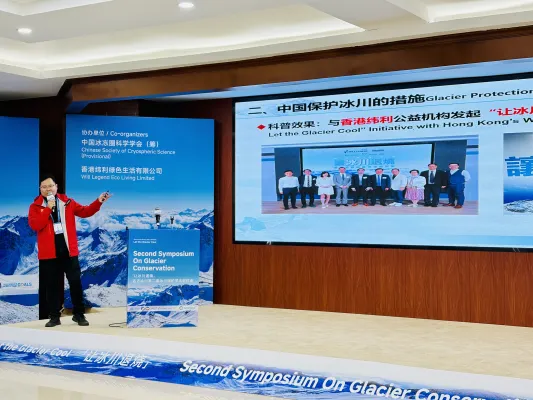
【Feiteng Wang|王飛騰】
Wang is a research professor and doctoral supervisor at the Northwest Institute of Eco-Environment and Resources, Chinese Academy of Sciences, and Head of the Tianshan Glaciological Station. His research and practical work encompass snow and ice science, glacier protection and ice and snow technologies associated with the Winter Olympics.
Presentation:
Glacier Protection Measures and Future Directions
The presentation addressed glacier protection measures and future research directions, connecting scientific investigation with conservation practice.
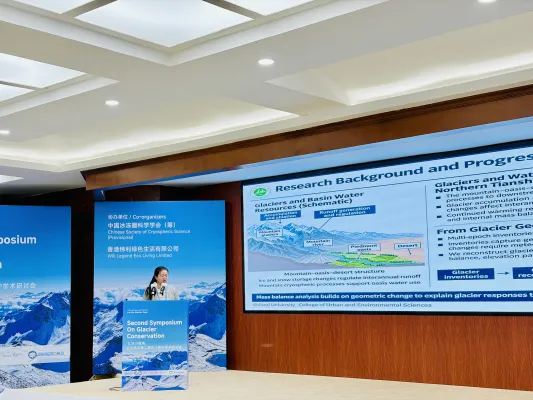
【Liping Xu|徐麗萍】
Professor Xu works at the College of Science, Shihezi University. Her research interests include resources and the environment in arid regions, cryospheric landscapes and glacier protection.
Presentation:
Glacier Change in the Manas River Basin in Response to Climate
The presentation examined the relationship between glacier change and climate in the Manas River Basin.
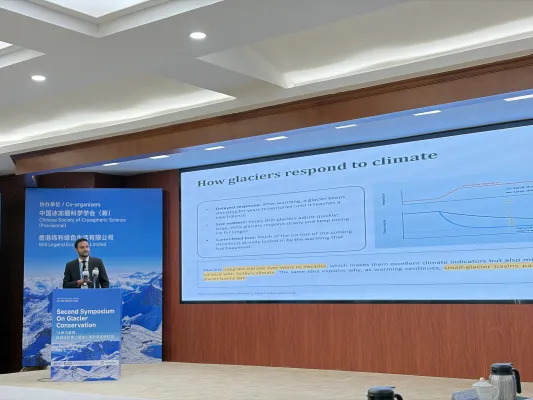
【Asim Qayyum Butt】
Butt holds a PhD in Physical Geography and undertakes postdoctoral research at the Northwest Institute of Eco-Environment and Resources, Chinese Academy of Sciences. His interests include glacier dynamics, water resources management and hydropower.
Presentation:
Bridging the Gap: Modeling Cryospheric Change and Adaptive Water Governance in the Hindu-Kush Himalayas
The presentation connected research on cryospheric change with water governance, exploring the relationship between science and adaptive management.
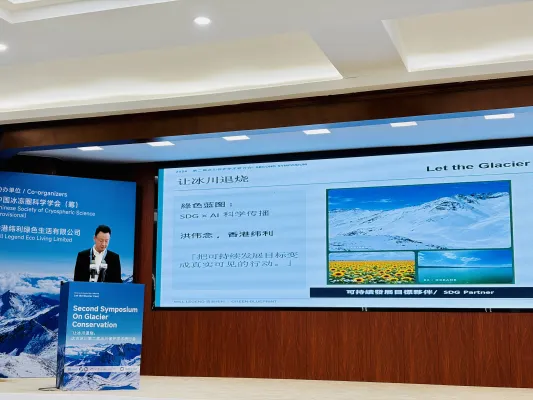
【William Hung|洪偉念】
Hung is the Founder and CEO of Will Legend and the originator of “Let the Glacier Cool”. His work connects science, education, businesses and communities through glacier learning, school exchanges, storybooks, films and music.
Presentation:
Let the Glacier Cool: Taking Science Communication Further
The presentation explored how research topics can become content that different audiences can understand and engage with, including opportunities for schools, businesses and communities to participate in science communication.
Together, the nine presentations provided a basis for interdisciplinary exchange, encompassing research, conservation practice, public understanding and social participation.
2. A Multilingual World Premiere Expands the Ways Science Can Reach People
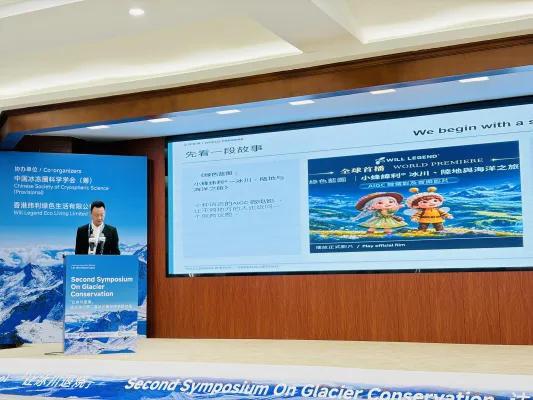
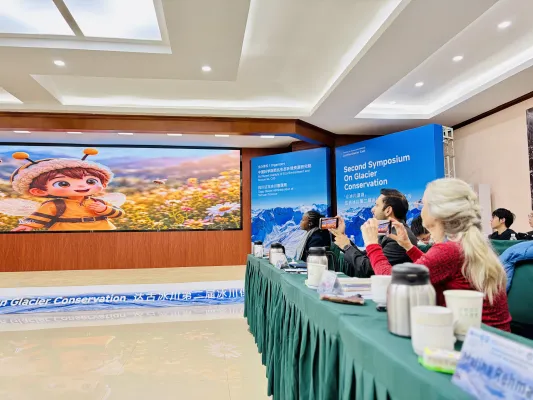
On 7 November, the Green-blueprint short film, “Willy Bee® — The Journey of Glacier, Land and Ocean”, had its world premiere at the symposium. Mandarin and English versions were screened.
Featuring Willy Bee® as a central character, the film uses AIGC visuals to explore connections between glaciers, land and oceans. Through freshwater, food and the air we breathe, it introduces audiences to the relationship between nature and everyday life.
The theme song from the Green-blueprint music video also served as the conference song. Its lyrics were written by Will Legend founder William Hung, expressing care for nature through the journey of a drop of water.
The image of water drops returning to glaciers conveys a hope that concern for glaciers will continue through learning, sharing and practical action to protect nature.
Presenting the film and song within an academic gathering demonstrated different approaches to science communication. Research topics can reach audiences of different ages and language backgrounds through images, music and character-led stories, with opportunities for further use in schools, workplaces and communities.
3. Bilingual Materials and Conference Keepsakes Carry the Conversation Forward
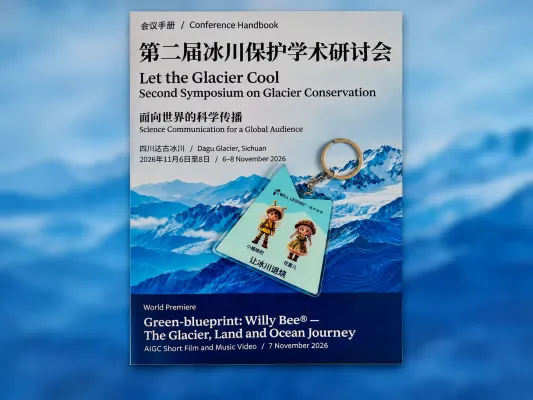
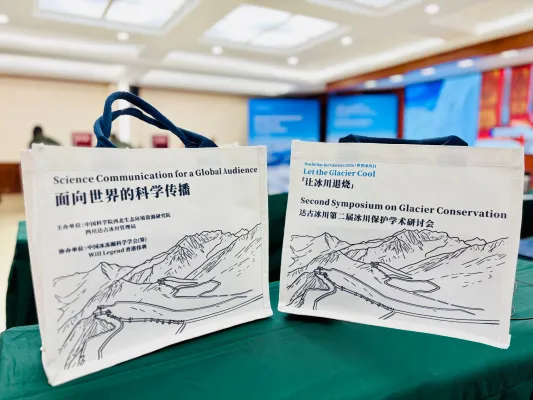
As a co-organiser, Will Legend contributed visual design, a bilingual conference handbook and educational storytelling to help communicate the symposium’s content and related science.
Participating scientists and scholars also received a conference-exclusive Willy Bee® keepsake: a glacier-shaped keyring. Combining glacier imagery, character design and conference information, it provides an everyday object through which participants can introduce Dagu Glacier and its conservation stories to others.
From handbooks and films to keepsakes, these physical and digital outputs offer different ways for conference content to continue circulating after the event.
For education and park partnerships, this also illustrates a potential design approach: combining Hong Kong design, local natural and cultural characteristics, and original intellectual property (IP) to develop storybooks, cultural and creative products, and educational materials that help people discover and understand a place.
4. Field Visits and a High-Altitude Plaque Connect Discussion with Place
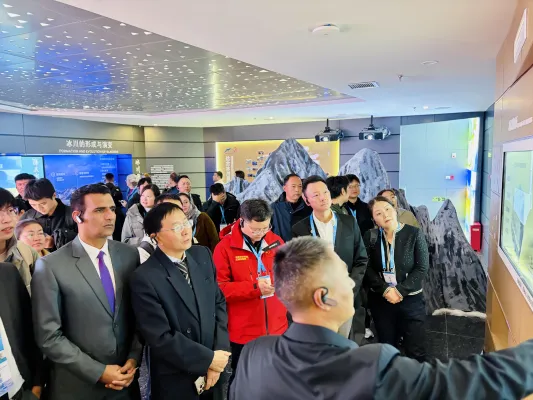
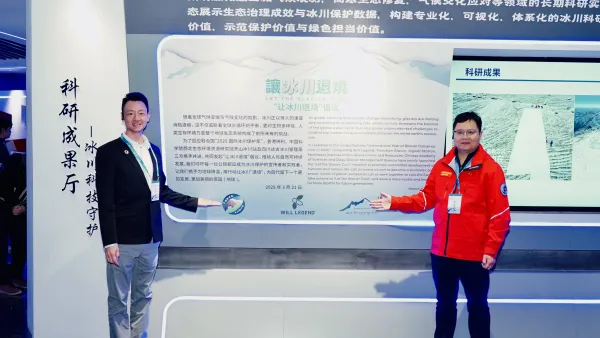
During the symposium, delegates participated in glacier science education and field visits. They also visited displays within the park’s glacier museum to learn more about research and conservation work at Dagu Glacier.
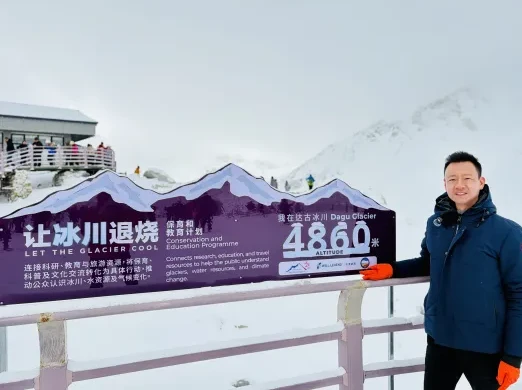
At the 4,860-metre Dagu Glacier summit, a newly made “Let the Glacier Cool” plaque presents the shared initiative of Will Legend, the Dagu Glacier Administration of Sichuan Province, and the Northwest Institute of Eco-Environment and Resources, Chinese Academy of Sciences. It brings the glacier conservation message into a setting where visitors can encounter the glacier landscape directly.
This work builds on a continuing history of cooperation.
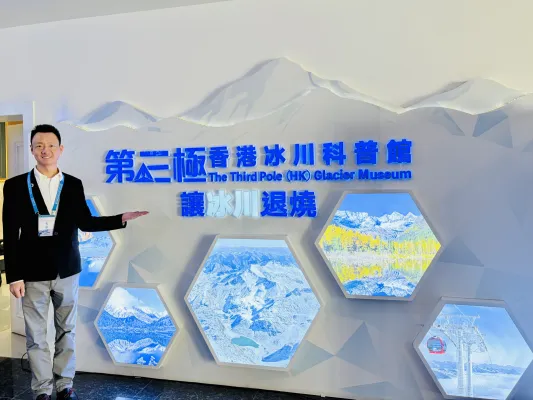
On 28 December 2023, Will Legend donated the Third Pole Hong Kong Glacier Landmark to the Dagu Glacier Administration. In cooperation with the Administration, the Third Pole (HK) Glacier Museum was established within the park’s existing geological and glacier museum. A “Let the Glacier Cool” plaque was also installed at the 4,860-metre site for the first time during that period.
The Third Pole (HK) Glacier Museum was established to bring people from Hong Kong and the Mainland of China closer together through glacier journeys, with particular emphasis on exchanges among young people and children. Combining science education and communication, it aims to bring the seemingly distant subject of glacier protection into everyday life. Participants are encouraged to understand how glaciers relate to their own lives and translate that understanding into environmental action, learning and sharing that they can take part in, connecting exchange between the two places with care for nature.
A separate display in the glacier museum presents the “Let the Glacier Cool” initiative jointly launched on 21 March 2025 by Will Legend, the Tianshan Glaciological Station of the Northwest Institute of Eco-Environment and Resources, Chinese Academy of Sciences, and the Dagu Glacier Administration of Sichuan Province.
The landmark, museum and high-altitude plaque continue to provide settings for glacier education, exchanges between Hong Kong and the Mainland of China, and public participation.
5. Extending Conference Outcomes into Education and Community Practice
The symposium’s exchanges and communication resources offer directions for further work with schools, corporate sustainability projects and park partnerships.
Schools can connect glaciers, climate and biodiversity through reading, observation, drawing, visual media and exchange activities, helping students move from learning about nature to expressing and sharing their understanding.
Businesses and organisations can work with specialist teams to develop projects around employee participation, community service or educational support, turning sustainability goals into activities with defined audiences and content.
Parks and museums can combine local landscapes, scientific knowledge and cultural characteristics in the coordinated development of original IP, science displays, cultural and creative products, and learning resources. These can extend learning and exchange beyond a visit.
This cooperation concept draws on Will Legend’s role as an international connector and a two-way bridge between research and the public. It translates scientific knowledge into accessible stories and design, while bringing local characteristics, public interests and educational needs into the creative process. By combining Hong Kong design, an international perspective and local culture, the aim is to improve the design quality and depth of content of cultural and creative products across different ice and snow parks, allowing them to carry local stories, scientific knowledge and educational value.
The concept also looks towards the long-term development of local communities. With respect for nature conservation and local culture, it seeks to support cultural and creative industries, education and related services through the ice and snow economy, helping create local employment and entrepreneurship opportunities. Giving young people working away from home another option to return and build their livelihoods—and creating conditions for more families to live together in their hometowns—is part of its longer-term social purpose.
Will Legend’s three guiding visions—environmental protection, social good and cultural inclusion—connect these directions with its continuing educational and community work.
In environmental protection, glacier learning, stories and films help people understand the connections between natural systems and daily life. In social good, visits to older residents and continued purchasing help sustain relationships with local communities. In cultural inclusion, learning exchanges between children from Hong Kong and the Mainland of China, alongside interactions with residents from different cultural backgrounds, provide opportunities for mutual understanding.
Outside the conference programme, William Hung revisited older residents in a Tibetan village, bringing rice, cooking oil, red packets and daily necessities as practical expressions of care. Since 2023, he has also continued purchasing honey from beekeepers in communities around Dagu Glacier in Heishui County, connecting the educational story of “one flower, one bee” with everyday life on the plateau.
Alongside the academic exchanges, these activities illustrate how science communication can connect with schools, businesses and communities beyond the conference venue.
6. Sharing Outcomes and Looking Towards the Next Stage
The symposium’s exchanges and communication resources offer directions for further work with schools, corporate sustainability projects and park partnerships.
Schools can connect glaciers, climate and biodiversity through reading, observation, drawing, visual media and exchange activities, helping students move from learning about nature to expressing and sharing their understanding.
Businesses and organisations can work with specialist teams to develop projects around employee participation, community service or educational support, turning sustainability goals into activities with defined audiences and content.
Parks and museums can combine local landscapes, scientific knowledge and cultural characteristics in the coordinated development of original IP, science displays, cultural and creative products, and learning resources. These can extend learning and exchange beyond a visit.
This cooperation concept draws on Will Legend’s role as an international connector and a two-way bridge between research and the public. It translates scientific knowledge into accessible stories and design, while bringing local characteristics, public interests and educational needs into the creative process. By combining Hong Kong design, an international perspective and local culture, the aim is to improve the design quality and depth of content of cultural and creative products across different ice and snow parks, allowing them to carry local stories, scientific knowledge and educational value.
The concept also looks towards the long-term development of local communities. With respect for nature conservation and local culture, it seeks to support cultural and creative industries, education and related services through the ice and snow economy, helping create local employment and entrepreneurship opportunities. Giving young people working away from home another option to return and build their livelihoods—and creating conditions for more families to live together in their hometowns—is part of its longer-term social purpose.
Will Legend’s three guiding visions—environmental protection, social good and cultural inclusion—connect these directions with its continuing educational and community work.
In environmental protection, glacier learning, stories and films help people understand the connections between natural systems and daily life. In social good, visits to older residents and continued purchasing help sustain relationships with local communities. In cultural inclusion, learning exchanges between children from Hong Kong and the Mainland of China, alongside interactions with residents from different cultural backgrounds, provide opportunities for mutual understanding.
Outside the conference programme, William Hung revisited older residents in a Tibetan village, bringing rice, cooking oil, red packets and daily necessities as practical expressions of care. Since 2023, he has also continued purchasing honey from beekeepers in communities around Dagu Glacier in Heishui County, connecting the educational story of “one flower, one bee” with everyday life on the plateau.
Alongside the academic exchanges, these activities illustrate how science communication can connect with schools, businesses and communities beyond the conference venue.